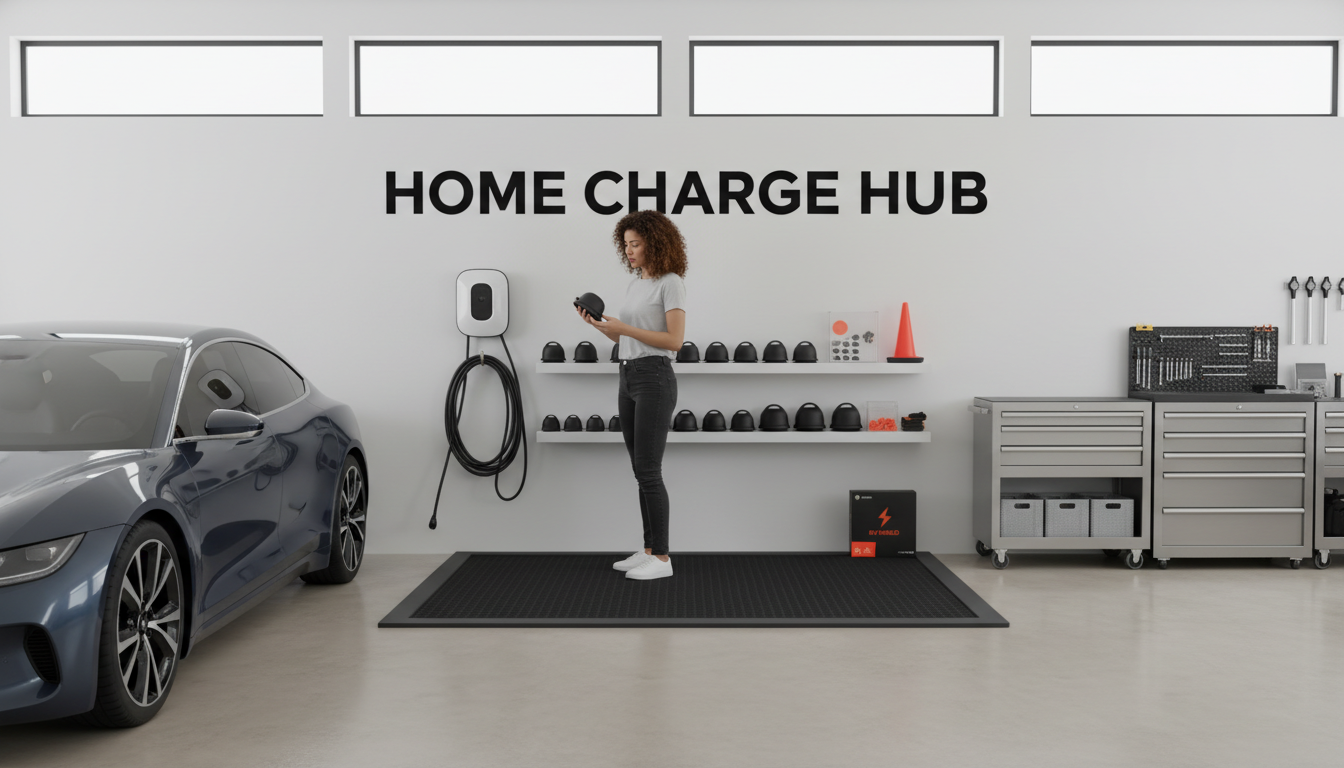
Managing two EV household charging Australia is best achieved by using smart load balancing chargers or a dual-port unit to distribute power safely between vehicles. These systems monitor total home energy usage to prevent overloading the electrical circuit, which often removes the need for costly switchboard upgrades. Homeowners can also alternate charging days on a single unit to minimize initial installation expenses.
Transitioning to a two EV household in Australia is a significant milestone for sustainability, yet it often brings an unexpected logistics headache. Many homeowners worry that plugging in two vehicles simultaneously will overload their switchboard, trip the main breaker, or require a ruinous five figure electrical upgrade. As more Australian families ditch petrol entirely, the challenge shifts from simple overnight charging to sophisticated home energy management. Getting this infrastructure right is the difference between seamless morning commutes and constant manual intervention. This guide explores the practicalities of dual charging; covering everything from the charger shuffle to the technical necessity of dynamic load balancing. We also examine the financial benefits of solar integration and provide realistic cost estimates for 2026, ensuring your home remains powered without blowing the budget.
The Rise of the Two EV Household in Australia
Australia’s automotive landscape has reached a significant milestone. By 2026, the early adopters who led the electric transition have moved beyond their first vehicle; they are now replacing their remaining internal combustion engine (ICE) cars with a second electric model. This shift brings a new set of logistical questions for Melbourne homeowners. The most common concern is whether doubling the EVs in the garage necessitates a costly switchboard upgrade or results in an unmanageable electricity bill.
Most Australian residential properties are equipped with a 63A main fuse. Two standard 7kW chargers can pull 32A each, totaling 64A; this exceeds the house limit before even accounting for the oven, air conditioning, or lighting. Without professional guidance, this setup risks tripping the main breaker and causing a total blackout during peak charging times.
Buddy Charge serves as your local Melbourne expert to navigate these technicalities. Transitioning to two EV household charging Australia doesn't have to mean a $5,000 mains upgrade. By utilizing a Single Phase Charger with smart management or a 3 Phase Charger where capacity allows, we help you leverage professional EV charger installation to ensure your home remains safe, efficient, and ready for a multi-EV future.
Can You Have Two EV Car Chargers at Home?
Yes, you can install two EV chargers at your property, but the physical installation is only half the equation. While mounting two units is straightforward, the primary constraint for two EV household charging Australia is the electrical capacity of your home’s main switchboard. Most residential properties in Melbourne operate on a 63A main fuse. Because two standard 7kW chargers can pull 64A combined, running both simultaneously without a management system will likely trip your main breaker; this is even before accounting for other high-draw appliances like air conditioning or ovens.
Installing multiple units without smart management is rarely advisable for single-phase homes. It is essential to ensure that any hardware meets Australian standards for safety and reliability. Given Melbourne’s exposure to unpredictable weather and heavy seasonal rain, selecting chargers with IP65 weather protection is a non negotiable requirement for outdoor installations. While having a dedicated cable for each car provides the ultimate convenience, the focus must remain on the available headroom in your electrical supply. Before proceeding, a professional EV charger installation assessment is necessary to determine if your current infrastructure can support the additional load.
Option 1: The One Charger Shuffle and Smart Scheduling
Before investing in additional hardware, many Melbourne families find that a single premium Single Phase Charger or 3 Phase Charger provides more than enough energy to maintain two vehicles. If both cars travel average daily distances of roughly 30 to 50 kilometers, a 7kW unit only needs about an hour or two per vehicle to replenish what was used. The strategy, often called the one charger shuffle, involves swapping the cable between vehicles every other night or at a specific interval during the evening.
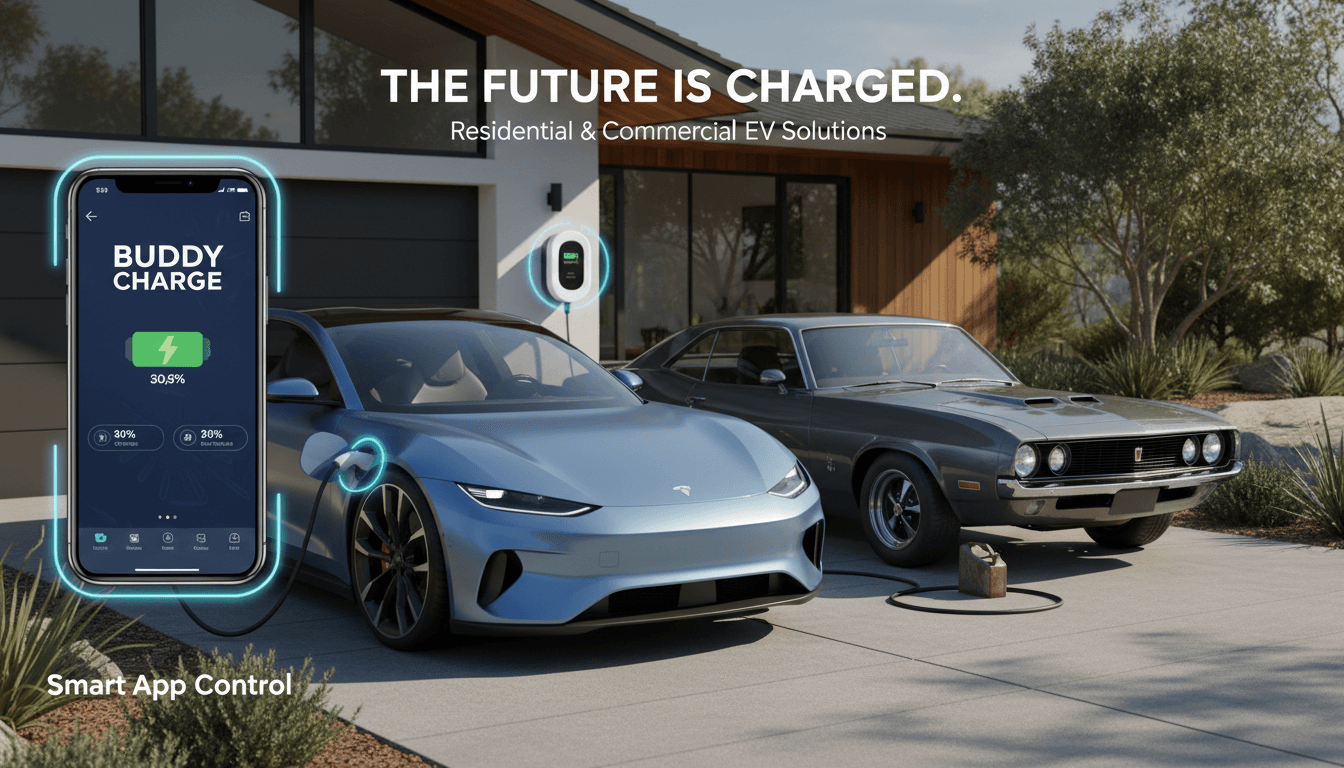
Smart app control transforms this manual process into a structured routine. Buddy Charge systems utilize robust Wi-Fi and Bluetooth connectivity, allowing you to manage energy delivery through a dedicated smartphone interface. Instead of plugging in and drawing power immediately at peak rates, you can use smart scheduling to divide the off-peak window. For example, you can set the app to charge Car A from 9 PM to 2 AM, and then Car B from 2 AM to 7 AM. By the time the morning commute begins, both batteries are topped up without ever exceeding your home's electrical capacity.
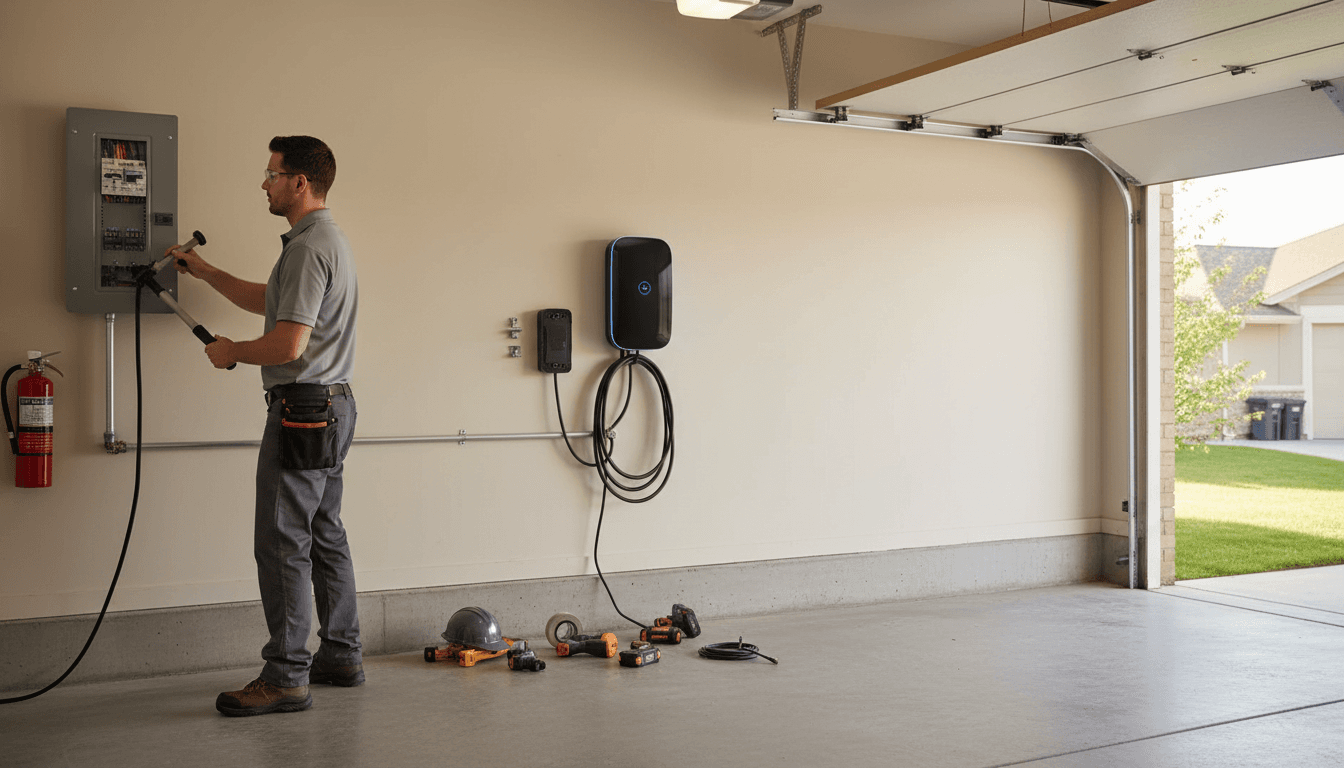
This approach is particularly effective for households with staggered schedules or those who work from home part-time. It eliminates the need for an additional circuit and keeps the initial professional EV charger installation costs lower. While it requires the minor physical task of moving the plug between cars, the software does the heavy lifting. This ensures that two EV household charging Australia remains affordable and technically simple for those with moderate daily driving needs.
Option 2: Dual Port Chargers vs Two Separate Units
If the one charger shuffle feels like too much manual labor, the next logical step for two EV household charging Australia is installing hardware that handles both vehicles simultaneously. You generally have two paths: a single dual-port unit or two independent smart chargers.
Dual-port chargers house two tethered cables in one chassis. While this looks streamlined, most residential dual-port units use basic power splitting. If the unit is rated at 7kW, it often locks each cable to 3.5kW when both cars are plugged in. This effectively drops your charging speed to the level of a portable unit, which is inefficient for larger batteries or shorter off-peak windows.
Installing two separate smart chargers, such as a Single Phase Charger for each bay, offers superior flexibility through intelligent power sharing. Unlike a simple 50/50 split, these units communicate. If Car A is nearly full and only drawing 2kW, the system automatically redirects the remaining 5kW to Car B. This ensures every available amp is used productively. Separate units also allow for better cable management if your charging ports are on opposite sides of the vehicles or different walls of the garage.
Feature | Dual-Port Unit | Two Separate Units |
|---|---|---|
Power Distribution | Often fixed 50/50 split | Dynamic power sharing |
Charging Speed | Reduced (e.g. 3.5kW each) | Max available (up to 7kW or 22kW) |
Placement | Restricted to one location | Flexible mounting options |
Redundancy | Single point of failure | Independent operation |
For a reliable setup, professional EV charger installation is required to configure the communication link between units, ensuring they never exceed your home’s total electrical capacity while prioritizing speed where it is needed most.
The Secret to Saving Money: Dynamic Load Balancing
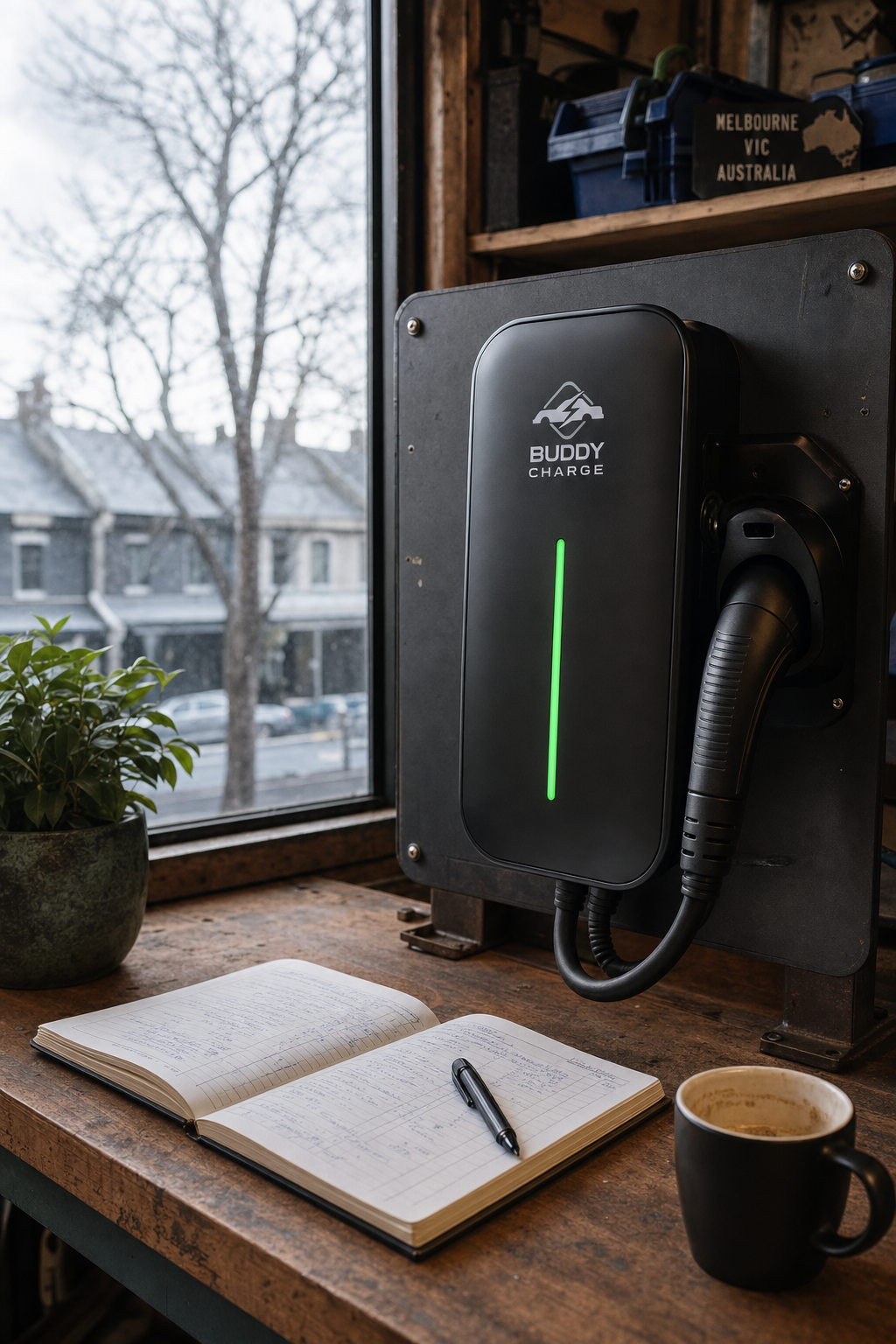
Dynamic load balancing is the technological bridge that allows a standard residential property to support two EVs without the exorbitant expense of a mains upgrade. In many older Melbourne suburbs, houses are limited by a 63A main fuse. If you attempt to draw more than this, the main breaker trips, plunging the entire house into darkness. A traditional installation might require a $5,000 infrastructure overhaul to increase that capacity. Dynamic load balancing provides a smarter, digital alternative.
The system works by installing a small sensor, known as a current transformer (CT) clamp, at the main incoming power line of your home. This sensor monitors the real time electricity consumption of the entire household. When you turn on high draw appliances like an induction cooktop, electric oven, or ducted air conditioning, the sensor detects the spike in demand. It instantly communicates with your Single Phase Charger or 3 Phase Charger, instructing the units to reduce their output.
The chargers only consume the leftover power that the house is not currently using. For example, if your home is using 40A for domestic tasks, the chargers will share the remaining 23A safely. As appliances are switched off, the system automatically ramps the charging speed back up to the maximum allowable limit. This protects the main breaker from overloading while ensuring every possible watt is directed to your vehicle batteries.
For two EV household charging Australia, this feature is essentially a safety net. It allows you to maximize charging speeds during the night when the rest of the house is quiet, while providing total peace of mind during the evening rush. Opting for professional EV charger installation ensures this sensor is calibrated correctly to your specific switchboard limits, future proofing your home without the need for disruptive and expensive civil works.
Load Balancing vs Power Sharing: What is the Difference?
While the terms are often used interchangeably, they represent two distinct layers of protection. Power sharing refers specifically to the communication between your EV chargers. If your electrical circuit is allocated a fixed 32A for vehicle charging, power sharing ensures that two units never exceed this combined total. If only one car is plugged in, it receives the full 32A; if a second car joins, the chargers negotiate a split, such as 16A each.
Dynamic load balancing operates on a higher level by managing the relationship between the charging system and the entire property. It monitors the total current drawn by the switchboard. If you turn on a high consumption appliance like a heat pump or an oven, load balancing reduces the power available to the chargers to prevent the main fuse from blowing.
Feature | Power Sharing | Load Balancing |
|---|---|---|
Primary Focus | Managing load between EV chargers | Protecting the main house fuse |
Communication | Charger to Charger | Charger to Main Switchboard |
Benefit | Maximises charging speed for cars | Prevents total property blackouts |
A robust two EV household charging Australia strategy utilizes both. Power sharing optimizes energy distribution between vehicles, while load balancing ensures that the professional EV charger installation integrates safely with your existing domestic demand. For homes utilizing a Single Phase Charger or a 3 Phase Charger, this dual approach provides the highest level of efficiency and safety without requiring expensive infrastructure upgrades.
Three Phase vs Single Phase for Two EV Households
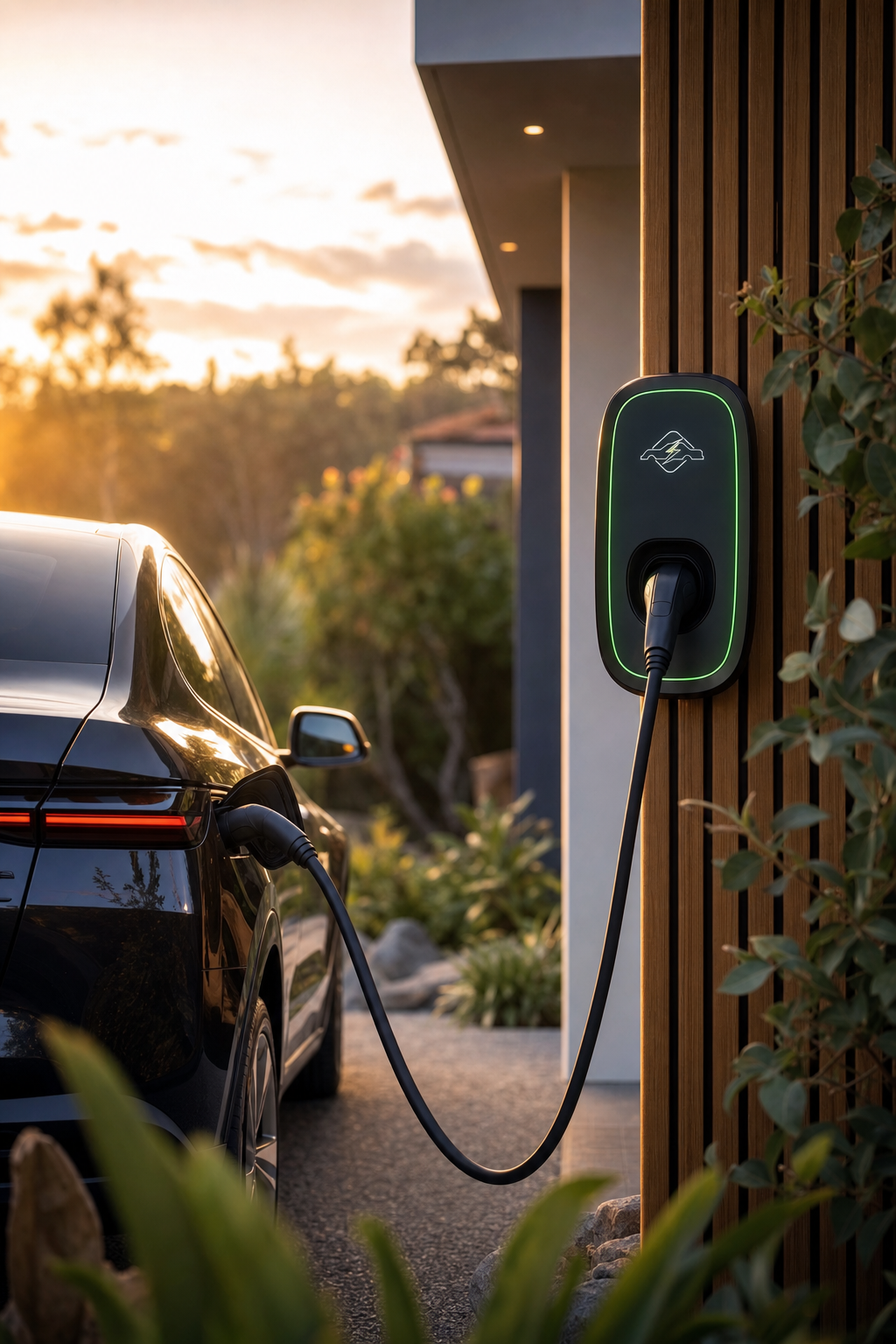
The distinction between single-phase and three-phase power is the most significant technical factor in how easily you can scale to a two EV household charging Australia. Most residential blocks in established Melbourne suburbs operate on a single-phase supply, providing a single 230V stream of electricity. In this environment, smart load management is a mandatory requirement rather than an optional upgrade. Because the total current is limited, the system must actively negotiate power between the house and the vehicles to prevent a total blackout.
Properties equipped with a three-phase supply have a distinct advantage for multi-car setups. Because power is delivered through three separate conductors, an electrician can perform a professional EV charger installation that assigns each Single Phase Charger to its own dedicated phase. This configuration allows two vehicles to draw a full 7kW simultaneously with zero interference or risk of overloading a single circuit. For homes with even higher energy demands, installing a 3 Phase Charger provides up to 22kW of overhead, making it easy to fast-charge one vehicle while the other tops up at a standard rate. While three-phase power simplifies the electrical logistics, single-phase homes can still support two vehicles effectively by using intelligent software to navigate the tighter capacity limits of the Melbourne grid.
Solar Integration: Charging Two Cars for Free
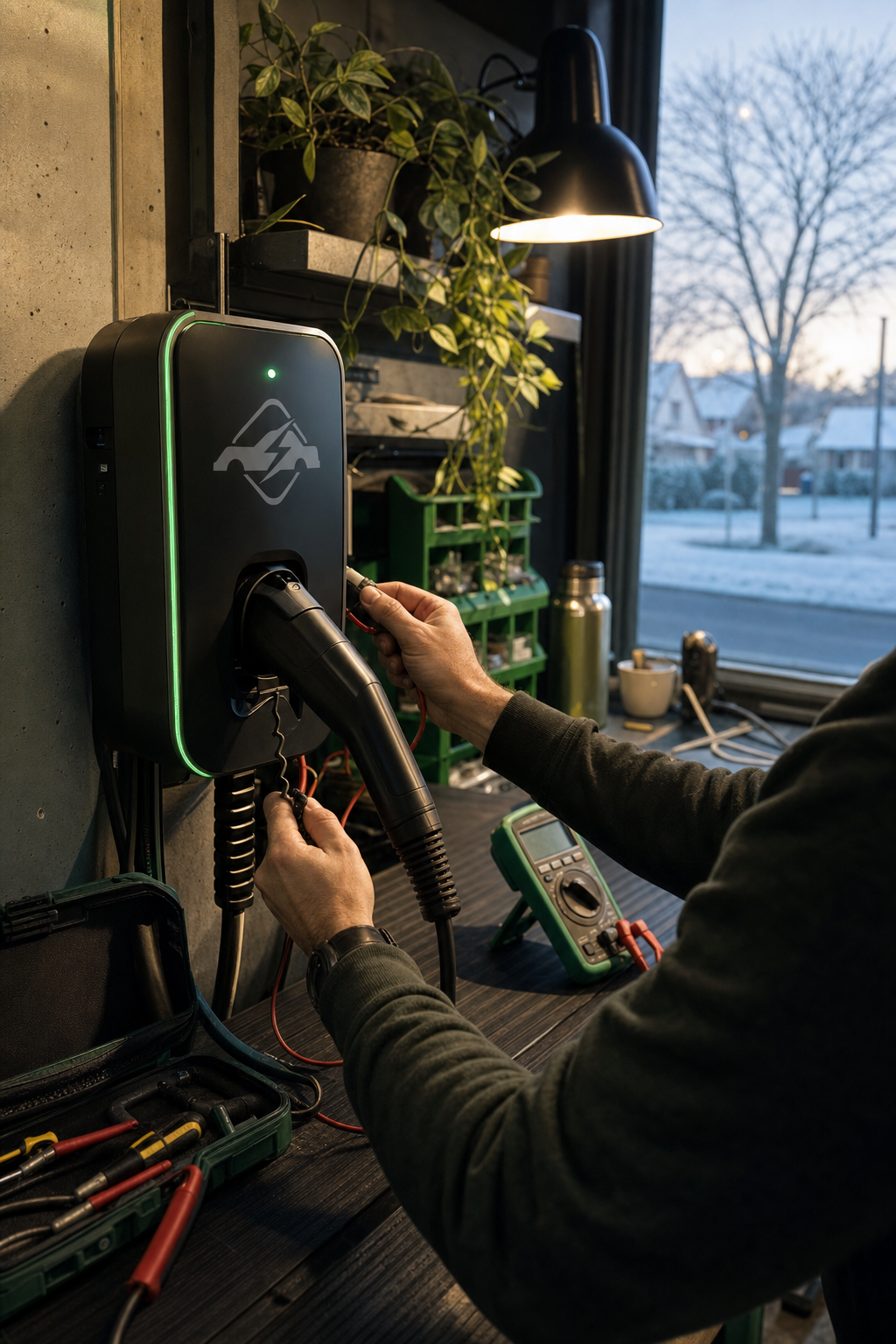
While managing phase capacity is a technical necessity, the most effective way to eliminate running costs for a two EV household charging Australia is through strategic solar integration. Australia leads the world in residential solar adoption; by 2026, many Melbourne homes have transitioned from basic 5kW systems to larger 10kW or 15kW arrays. Instead of exporting excess energy back to the grid for a minimal feed-in tariff, Buddy Charge systems allow you to divert that surplus directly into your vehicle batteries.
Our smart chargers include dedicated solar tracking modes that monitor your inverter’s output in real time. When your panels produce more than the house requires, the system begins charging your cars automatically. For a two-car setup, the software can split this free energy between both vehicles. While solar charging may occur at lower speeds than a full 7kW grid draw, providing 2kW or 3kW to each car throughout a sunny Victorian afternoon can easily add 100km of combined range by sunset.
By utilizing a Single Phase Charger or a 3 Phase Charger with integrated solar monitoring, you shift your primary charging window from the middle of the night to the peak of the day. A professional EV charger installation includes the setup of the necessary energy meters to ensure your cars prioritize excess solar, effectively insulating your household budget from fluctuating utility prices.
Cost Estimates for Dual EV Charger Installation in Australia 2026
Budgeting for two EV household charging Australia requires a clear understanding of both hardware and infrastructure. A standard installation for a second dedicated circuit typically ranges between $1,500 and $2,500. This price covers the labor of a licensed electrician, the physical cabling, and the required safety switches. When you factor in the hardware, such as a premium Single Phase Charger or a more powerful 3 Phase Charger, the total investment for a complete dual system often sits between $4,500 and $7,500.
Component | Estimated Cost (AUD) | Details |
|---|---|---|
Second Dedicated Circuit | $1,500 – $2,500 | Labor, cabling, and safety switches. |
Smart EV Charger Unit | $1,100 – $2,200 | Per unit cost for intelligent hardware. |
Load Management Sensors | $300 – $600 | Hardware for dynamic balancing. |
Switchboard Upgrades | $500 – $1,500 | Required if existing space is insufficient. |
Several variables influence the final quote. Long cable runs from the main switchboard to the garage increase material costs and labor time. If your existing switchboard is full, you may need a sub-board or a technical upgrade to accommodate new circuits. Choosing chargers with integrated dynamic load balancing may add a small premium to the hardware cost; however, it often saves thousands by avoiding a main supply upgrade.
This expenditure represents a permanent capital improvement. By 2026, a home capable of charging two vehicles simultaneously is significantly more attractive to the growing demographic of EV owners. Investing in professional EV charger installation ensures your property is future proofed, providing both daily convenience and long term value in the Melbourne real estate market.
Managing two electric vehicles at home does not have to be expensive or complicated. By choosing smart charging times and balancing your home's load, you can keep energy costs low while ensuring both cars are ready for the road. If you want expert help setting up your ideal home charging arrangement, our team can guide you through the process. A Single Phase Charger is often the most cost-effective and efficient solution for most Australian households. We are here to help you make the right choice for your family.