Electric vehicles are significantly cheaper to run than traditional cars, as EV vs petrol running costs Australia comparisons show charging costs as low as $1.44 per 100km versus roughly $25 for petrol. Maintenance is also more affordable at approximately 2 cents per kilometre for EVs compared to 7 cents for petrol engines. These combined savings on power and servicing make electric cars a much more cost-effective choice for Australian drivers long-term.
Watching the numbers climb at the petrol pump has become a frustrating ritual for Melbourne drivers, especially as the cost of living remains high. While the initial price tag of an electric vehicle often dominates the conversation, the real story lies in the daily operational expenses that define your long term budget. In 2026, the financial argument for switching to electric is stronger than ever; however, navigating road user charges and varying electricity tariffs requires a strategic approach. This article provides a comprehensive breakdown of cents per kilometre costs and explains why EV maintenance remains seventy percent cheaper than traditional engines. You will discover how smart charging technology and solar integration can drive your fuel costs toward zero. We will also explore Victorian incentives and technical solutions like dynamic load balancing to ensure your transition is both profitable and seamless.
The Shifting Landscape of Australian Road Costs in 2026
As we approach 2026, the financial math for Melbourne drivers is undergoing a fundamental shift. Petrol prices across Victoria consistently hover between $1.85 and $2.10 per litre, a trend driven by global volatility that shows no sign of reversing. This creates a predictable strain on household and business budgets alike. In contrast, the Victorian electricity market offers a level of price control and optimization that internal combustion engines simply cannot match.
When evaluating EV vs petrol running costs Australia, the conversation often starts with the higher upfront purchase price of an electric vehicle. However, the gap in fuel costs is at an all-time high. To truly understand the value of an EV, Melbourne families and fleet managers must move beyond the sticker price and focus on Total Cost of Ownership (TCO). This metric accounts for every dollar spent over the life of the vehicle, including energy, registration, and servicing.
Research indicates that the lifetime running cost difference can exceed $30,000, making the electric option significantly more economical over a typical five to seven year ownership period. Securing these savings requires more than just a car; it requires a strategic approach to Melbourne EV charger installation. By leveraging smart infrastructure, drivers can bypass the public charging premium and tap into Victorian off-peak rates that make the cost per kilometre negligible compared to traditional fossil fuels.
Cents per Kilometre: The Direct Fuel Comparison
Analyzing EV vs petrol running costs Australia requires looking past the pump and into the kilowatt-hour. For a typical petrol-powered SUV in Melbourne, fuel consumption averages between 8 and 10 litres per 100 kilometres. At current prices of approximately $2.00 per litre, this translates to a cost of roughly $16.00 to $20.00 for every 100 kilometres traveled.
Electric vehicles operate on a different scale of efficiency. A standard EV consumes approximately 18kWh to cover that same 100-kilometre distance. While public fast-charging networks can cost between 40 and 60 cents per kWh, the significant financial advantage is found through intelligent home charging. By utilizing specific EV energy plans from providers like AGL or OVO, Melbourne drivers can access off-peak windows where electricity rates drop to between 8 and 15 cents per kWh.
Vehicle Type | Energy Consumption | Energy Price (Avg) | Cost per 100km |
|---|---|---|---|
Petrol SUV | 9L / 100km | $2.00 / Litre | $18.00 |
EV (Public Fast) | 18kWh / 100km | $0.50 / kWh | $9.00 |
EV (Home Off-Peak) | 18kWh / 100km | $0.08 / kWh | $1.44 |
Under these off-peak conditions, the cost to refuel drops to roughly $1.44 to $2.70 per 100km. Achieving these rates consistently requires hardware capable of delivering high amperage during specific, narrow windows. A standard 10-amp portable unit often charges too slowly to fully replenish a large battery within a typical 12am to 6am off-peak window.
A professional Melbourne EV charger installation ensures the vehicle draws maximum power safely when prices are at their lowest. For larger households or high-mileage drivers, a 3 Phase Charger provides the throughput needed to ensure the car is ready by morning without ever touching peak-rate electricity. This direct fuel comparison illustrates why the fuel price gap has become the most compelling reason to transition away from internal combustion engines, especially for those who can optimize their charging infrastructure.
Why Maintenance Costs for EVs are 70 Percent Lower
Beyond the immediate relief at the fuel pump, the mechanical simplicity of an electric drivetrain introduces a significant secondary saving. When analyzing EV vs petrol running costs Australia, maintenance is often the most underrated factor, yet it typically represents a 70 percent reduction in ongoing service expenses. Industry data indicates that while a petrol vehicle costs approximately 7 cents per kilometre to maintain, an EV averages just 2 cents.
This discrepancy is rooted in fundamental engineering. An internal combustion engine relies on thousands of moving parts, high heat, and constant friction, necessitating frequent oil changes, filter replacements, and spark plug services. In contrast, an EV motor has roughly 20 moving parts. Furthermore, regenerative braking systems use the electric motor to decelerate the vehicle. This process not only harvests energy back into the battery but also significantly extends the life of physical brake pads and rotors, which are used far less frequently than in a traditional car.
For a typical driver in Melbourne suburbs covering 15,000 kilometres annually, these marginal gains accumulate into substantial figures.
Cost Category | Petrol Vehicle (7c/km) | Electric Vehicle (2c/km) | Annual Saving |
|---|---|---|---|
Routine Maintenance | $1,050 | $300 | $750 |
Combined Operational Efficiency* | $3,200 | $1,400 | $1,800 |
\*Includes estimated fluid, brake, and minor wear-and-tear savings.
These figures demonstrate that a Melbourne driver can expect total annual operational savings of approximately $1,500 to $2,000. To safeguard these savings, a professional Melbourne EV charger installation is essential. High quality home charging hardware provides the stable, regulated power delivery needed to maintain battery health, ensuring the vehicle’s most expensive component remains efficient for the life of the car.
The Smart Charging Advantage: Maximizing Your ROI
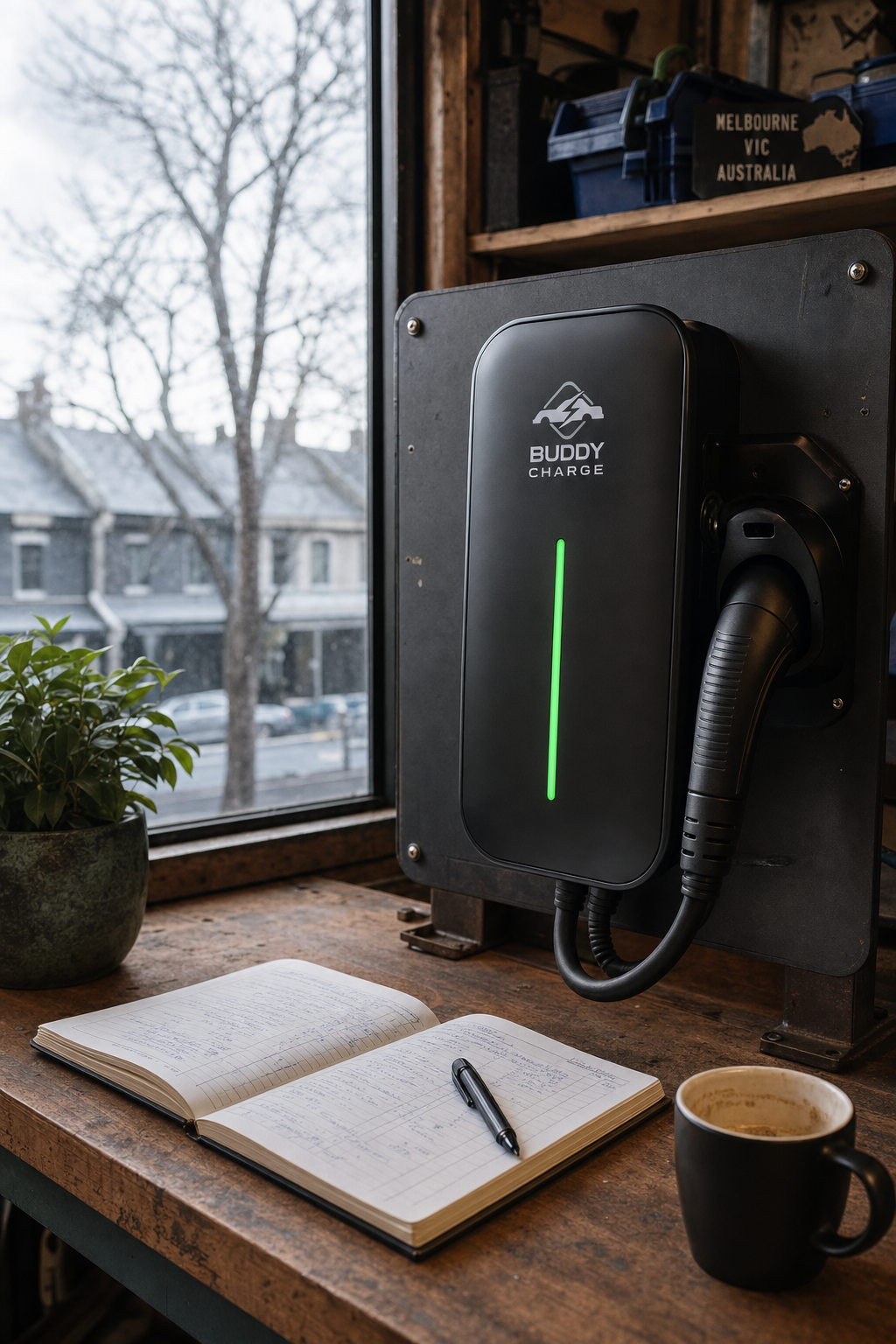
While reducing mechanical wear happens naturally over time, capturing the full potential of EV vs petrol running costs Australia requires a deliberate charging strategy. The vehicle is only half of the financial equation; the hardware used to refuel it determines the actual cost per kilometre. Many new owners initially rely on portable 10-amp cables, colloquially known as granny chargers. These basic units lack the intelligence to communicate with the grid and often charge too slowly to finish a full cycle within the optimal 12am to 6am off-peak window.
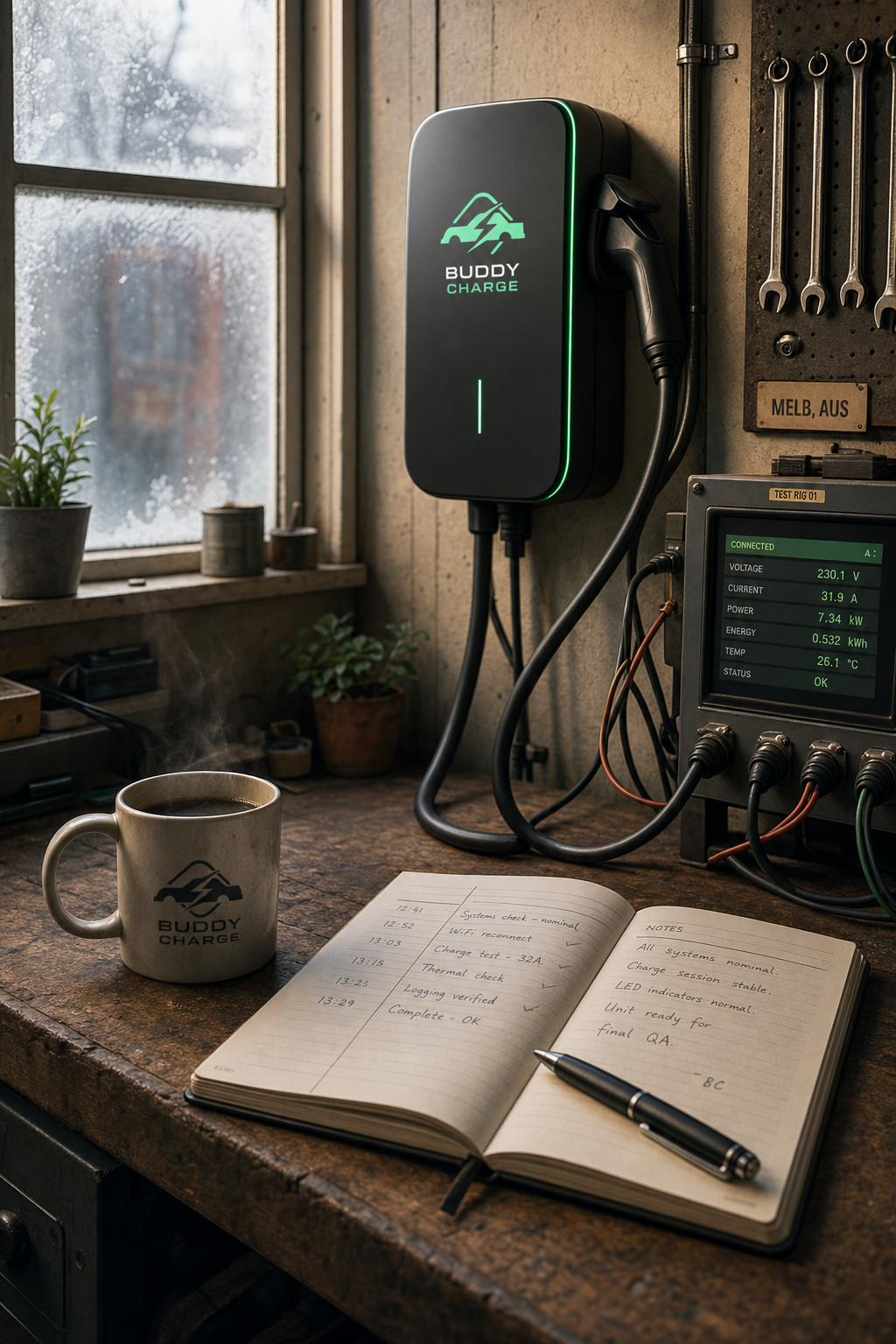
A professional Melbourne EV charger installation shifts this dynamic by introducing smart, wall-mounted systems. These units feature integrated app control, allowing drivers to automate charging schedules to align perfectly with the cheapest electricity rates. This precision is essential for maximizing the return on investment. Furthermore, Wi-Fi connectivity and RFID access provide tools for monitoring exact energy consumption and associated costs. For businesses or households with multiple drivers, RFID cards ensure that only authorized users can initiate a session; this provides a digital paper trail of every cent spent.
This level of visibility transforms the charger into a sophisticated energy management tool. By using data to avoid peak-rate spikes and ensuring the battery is topped up when power is cheapest, owners can lock in the lowest possible operating costs. Moving beyond a standard plug-and-play approach to a managed, intelligent system is what truly widens the margin between electric mobility and the rising costs of fossil fuels.
Solar Integration: Driving for Zero Dollars per Kilometre

The most potent tool in reducing EV vs petrol running costs Australia is already sitting on the rooftops of many Melbourne homes. While off-peak grid charging is inexpensive, solar EV charging offers what industry experts call the Solar Dividend; a scenario where the marginal cost of fuel effectively drops to zero. In many Victorian suburbs, homeowners receive a modest feed-in tariff, often ranging from 3.3 to 5 cents per kWh, for the excess energy they export back to the grid. By redirecting this power into an EV battery instead, drivers capture significantly more value than they would from a credit on their utility bill.
This process, known as solar soaking, utilizes smart hardware to monitor real-time generation. Buddy Charge systems integrate with existing rooftop solar arrays to ensure the vehicle only draws power when there is a surplus. Instead of the vehicle drawing expensive electricity from the grid, it soaks up the midday sun. For a Melbourne commuter, this transforms the daily drive into a cost-free exercise. When compared to a petrol vehicle costing roughly $18.00 per 100km, the ability to harvest free energy from your own roof creates an insurmountable financial lead for electric mobility. This integration ensures that your solar investment works harder, further insulating your household or business from future energy price hikes.
Dynamic Load Balancing: Protecting Your Property and Your Wallet
Capturing the full benefits of EV vs petrol running costs Australia involves addressing infrastructure expenses that often go unmentioned. For many owners in established Melbourne suburbs, the primary barrier to high-speed charging is not the car, but the property’s existing electrical capacity. A standard single-phase residential supply may struggle to support a 7.2kW charger alongside heavy loads like air conditioning, electric ovens, or pool pumps.
This is where dynamic load balancing becomes a critical financial safeguard. This technology monitors the total power draw of the building in real-time, automatically throttling the charger’s output when other appliances are active to ensure the main circuit breaker never trips. For busy workplaces or older Victorian homes, this intelligent management typically eliminates the need for a comprehensive mains upgrade. Avoiding a $2,000 to $4,000 switchboard overhaul preserves the long-term savings that make the transition to electric so compelling.
Reliability also extends to physical durability. Given Victoria’s unpredictable climate, Buddy Charge systems feature IP65 weather protection. This rating ensures the internal electronics remain sealed against heavy rain and dust, preventing premature hardware failure. Integrating these protective measures during a professional Melbourne EV charger installation ensures that your charging infrastructure remains a one-time investment rather than a source of unexpected maintenance costs.
Hidden Costs and 2026 Incentives in Victoria
When calculating EV vs petrol running costs Australia, the final balance sheet includes variables beyond fuel and tires. In Victoria, the road user charge for zero emission vehicles is a key consideration. While often framed as a hidden cost, this charge is partially offset by the Victorian government’s $100 annual discount on vehicle registration for EV owners. These regulatory costs are predictable components of a modern fleet or household budget.
Insurance premiums represent another nuanced factor. Insurers frequently cite higher repair costs for specialized components and battery systems, which can result in slightly higher premiums compared to an equivalent petrol SUV. However, these figures must be viewed within the broader context of the $30,000 lifetime operational saving identified in recent industry research.
Cost Element | Electric Vehicle (Est. 2026) | Petrol Vehicle (Est. 2026) |
|---|---|---|
Annual Registration | $100 Discount Applied | Standard Rate |
Fuel/Energy per km | 2 to 4 cents | 14 to 20 cents |
Road User Charge | ~2.8 cents per km | N/A (Included in Fuel Excise) |
Maintenance per km | 2 cents | 7 cents |
The most significant hidden cost actually relates to battery longevity. Relying on basic portable chargers can lead to gradual battery degradation due to inefficient thermal management and inconsistent voltage delivery. A professional Melbourne EV charger installation mitigates this risk. By providing a stable current and utilizing smart monitoring to prevent over-temperature events, dedicated chargers maintain battery health far better than standard wall plugs, protecting the vehicle’s primary asset and its future resale value.