V2G bidirectional charging Australia is now legally permitted and expanding through major utility trials, allowing homeowners to use their electric vehicles as mobile batteries to supply power back to the grid. Compatible EV models from Hyundai and Kia enable users to earn income or lower energy bills by exporting stored electricity during peak periods, with massive infrastructure growth projected by 2026.
You have a massive battery sitting in your driveway, yet your electricity bills continue to climb. For years, Australian homeowners have watched their electric vehicles function as one-way consumers of energy while the grid struggles during peak periods and prices skyrocket. This inefficiency is finally ending as 2026 marks the year bidirectional charging moves from experimental pilot programs to a standard household utility. It is no longer just about driving; it is about transforming your vehicle into a mobile power plant that can slash your energy costs and support the national grid. In this guide, we break down the critical hardware requirements for V2G and V2H systems, identify which Australian EVs support this technology, and explain how Victorian residents can monetize their car battery. From necessary switchboard upgrades to battery health concerns, we provide the practical roadmap you need to master the next era of energy independence.
What is Bidirectional Charging and Why is 2026 the Tipping Point?
Bidirectional charging transforms an electric vehicle from a simple energy consumer into a sophisticated mobile power station. While traditional chargers only move electricity from the grid into a car, bidirectional systems facilitate a two-way flow. This allows the stored energy in an EV battery to power a home or export back to the wider electrical network.
The year 2026 is widely considered the tipping point for V2G bidirectional charging Australia. This shift is driven by the full integration of Australian Standards AS/NZS 4777.2:2020, which governs how inverters interact with the grid. Recent years were defined by limited trials, such as the Amber Electric ARENA project, which has now expanded to support over 1,000 homes. While 2024 and 2025 focused on technical validation and safety testing, 2026 marks the arrival of mainstream hardware and utility support for Melbourne residents.
For those considering a Melbourne EV charger installation, the move toward bidirectional capability represents a fundamental shift in energy management. By combining these systems with solar EV charging, homeowners can capture excess generation during the day and discharge it when grid prices peak or when the sun goes down. This transition moves the EV battery from a depreciating asset to a core pillar of a property's energy ecosystem.
Understanding the Trio: V2G, V2H, and V2L Explained
Navigating the landscape of bidirectional technology requires a clear grasp of three distinct protocols: V2L, V2H, and V2G. While they all involve drawing power from the car, their applications range from running a laptop to supporting the entire Victorian electrical network.
Vehicle to Load (V2L) is the most accessible entry point. It utilizes an integrated inverter within the vehicle to provide standard AC power through a socket, typically located in the cabin or the charging port. It is ideal for powering tools on a job site, running appliances during a camping trip, or keeping a fridge operational during a localized outage. This is a point-of-use solution that does not require connection to your home switchboard.
Vehicle to Home (V2H) is often described as the home battery killer. This system allows your EV to act as a high capacity stationary battery for your residence. By integrating a bidirectional single phase smart charger or three phase equivalent, the vehicle can power your lights, HVAC, and appliances. For Victorian homeowners, V2H offers the most immediate financial impact. By discharging the EV’s 60 to 80kWh battery during evening peak periods when electricity rates are highest, you can avoid expensive grid draw entirely. This is far more substantial than the 13.5kWh capacity found in most dedicated home batteries.
Vehicle to Grid (V2G) represents the most advanced tier of V2G bidirectional charging Australia currently offers. This protocol enables your vehicle to export energy back into the distribution network. When combined with solar EV charging, V2G allows you to capture free energy from the sun and sell it back to the grid during periods of high demand, effectively turning your driveway into a revenue generating asset.
Feature | V2L (Vehicle to Load) | V2H (Vehicle to Home) | V2G (Vehicle to Grid) |
|---|---|---|---|
Primary Use | Portable appliances and tools | Home backup and bill reduction | Grid support and income |
Typical Output | 2kW to 3.6kW | 5kW to 10kW | 5kW to 10kW+ |
Hardware Needed | Simple vehicle adapter | Bidirectional charger | Bidirectional charger and Smart Meter |
Complexity | Plug and play | Requires professional installation | Requires DNSP approval |
The distinction is critical when planning a Melbourne EV charger installation. While V2L is a vehicle feature, V2H and V2G require specialized infrastructure and grid synchronization to function safely and efficiently.
The Financial Case: How Victorian Homeowners Earn Money with V2G
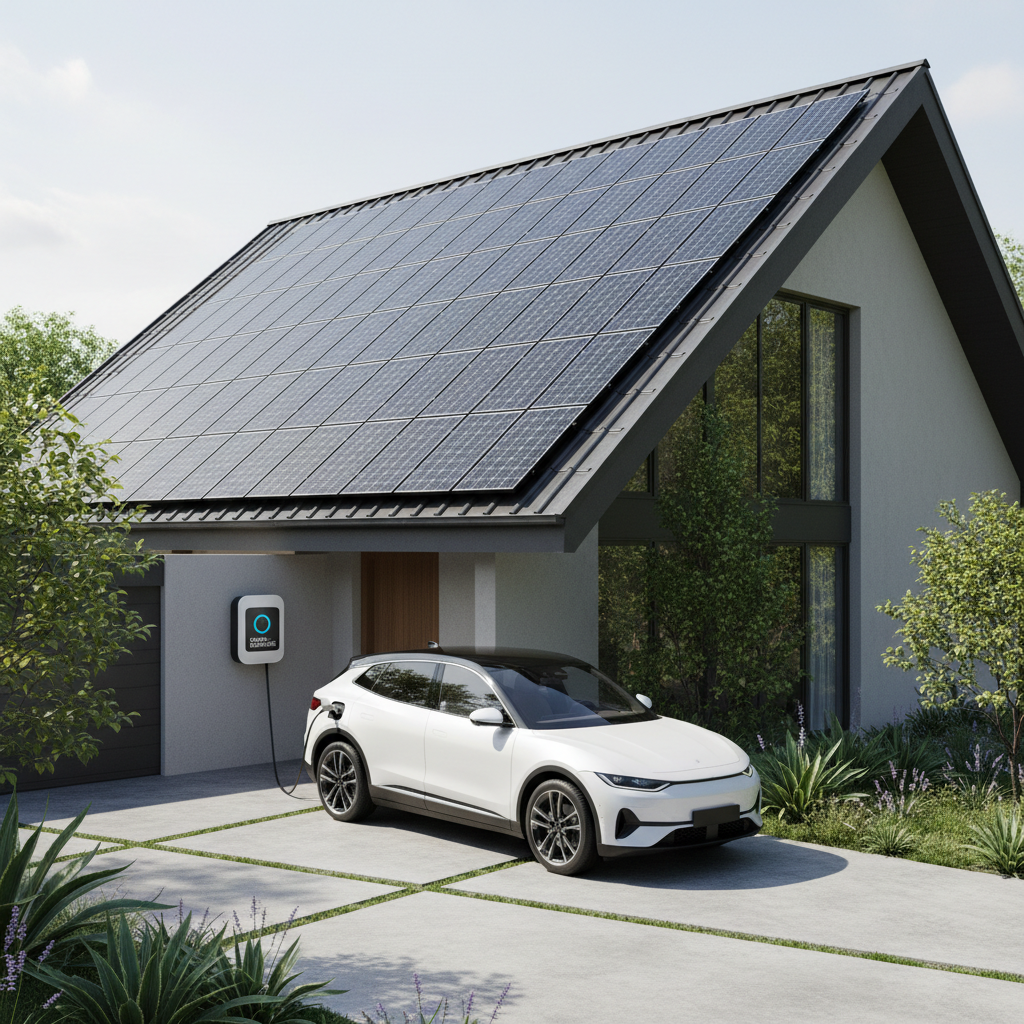
The economic logic of V2G bidirectional charging Australia rests on the disparity between wholesale electricity prices throughout the day. In Victoria, the energy market frequently experiences price volatility. During a sunny afternoon, excess renewable energy often drives prices down to near zero or even negative values. Conversely, during evening peaks or supply constraints, wholesale prices can spike toward the market cap.
Data from recent trials, such as the Amber Electric ARENA project, highlights the earning potential for Melbourne households. In one documented instance, a Victorian participant earned over $200 in a single day by exporting energy during a wholesale price surge. This was achieved by charging the vehicle at a low rate, approximately 10c/kWh, via solar EV charging earlier in the day and discharging it back to the grid when the spot price hit $15/kWh. While such extreme spikes are not daily occurrences, the ability to capitalize on them transforms the EV from a cost center into a flexible asset.
When comparing this technology to traditional stationary storage, the primary advantage is scale. Most dedicated home batteries offer roughly 13.5kWh of usable capacity. In contrast, a standard long range EV contains between 60kWh and 80kWh. This massive reserve allows a homeowner to support their household needs through V2H while still retaining significant capacity to export via V2G.
Storage Type | Typical Capacity | Approximate Home Backup Duration | Market Participation Potential |
|---|---|---|---|
Standard Home Battery | 10kWh to 14kWh | 0.5 to 1 day | Moderate |
Electric Vehicle (EV) | 60kWh to 80kWh | 3 to 5 days | High |
For those investing in a Melbourne EV charger installation, the financial return is no longer limited to avoiding petrol costs. By utilizing a single phase smart charger with bidirectional capability, you effectively own a power plant that can arbitrage the Victorian energy market. This shift significantly shortens the payback period of the charging hardware and the vehicle itself by capturing value that was previously inaccessible to residential properties.
Which EVs Support Bidirectional Charging in Australia in 2026?
Identifying which vehicle to park in your driveway is the critical next step for any Melbourne EV charger installation. By 2026, the market has matured significantly, moving beyond experimental models to a wide range of production vehicles. The Hyundai IONIQ 5 and IONIQ 6, alongside the Kia EV6, EV9, and EV5, remain the gold standard due to their native E-GMP architecture. BYD has also solidified its position with the Atto 3 and Seal, providing robust support for the V2G bidirectional charging Australia requires for grid participation. While most modern models utilize the CCS2 standard, the Mitsubishi Outlander PHEV continues to support bidirectional flow through its CHAdeMO port, a legacy standard that remains highly effective for V2H applications.
The most frequent inquiry we receive concerns the Tesla Model 3 and Model Y. As of 2026, Tesla has integrated the necessary power electronics for bidirectional capability across its refreshed lineup. While older iterations were hardware limited, the latest Australian deliveries now support V2H and V2G functionality. This is typically activated via software updates when the vehicle detects a compatible single phase smart charger or three phase DC bidirectional system.
Manufacturer | Models | Primary Connection | Capability Status |
|---|---|---|---|
Hyundai | IONIQ 5, IONIQ 6 | CCS2 | Native Support |
Kia | EV6, EV9, EV5 | CCS2 | Native Support |
BYD | Atto 3, Seal | CCS2 | Native Support |
Mitsubishi | Outlander PHEV | CHAdeMO | Native Support |
Tesla | Model 3, Model Y | CCS2 | Software Enabled |
Volvo | EX30, EX40 | CCS2 | Native Support |
Hardware Requirements: Choosing a Bidirectional Charger
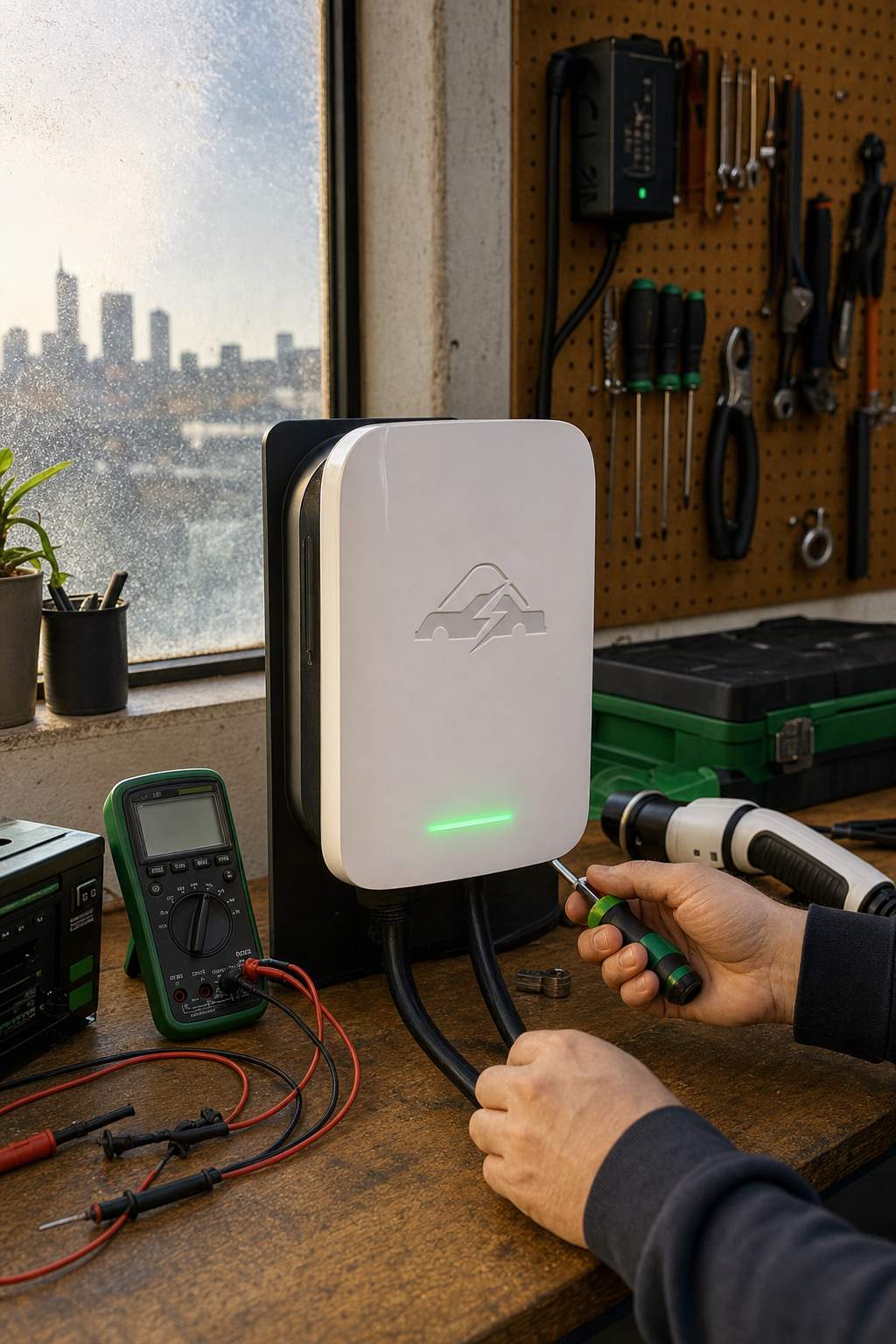
While a high quality single phase smart charger is excellent for standard use, V2G bidirectional charging Australia requires specialized hardware. A standard unit acts as a one way valve, only allowing energy to flow into the car. To reverse that flow, you currently need a DC bidirectional charger like the Starcharge Halo or the Sigenergy Sigenstor. These units take DC power directly from the vehicle battery and convert it to AC for home use, bypassing the vehicle’s internal inverter limitations.
Technology is also moving toward AC bidirectional solutions. Manufacturers such as Enphase and SolarEdge are developing systems designed to simplify the Melbourne EV charger installation process by integrating directly with existing solar ecosystems. These upcoming AC options promise to make bidirectional capability more accessible for residential applications.
Charger Type | Technology | Current Availability | Key Advantage |
|---|---|---|---|
DC Bidirectional | External Conversion | High (Halo, Sigenstor) | Maximum efficiency and speed |
AC Bidirectional | Vehicle Inverter | Emerging (Enphase, SolarEdge) | Simpler installation and lower cost |
The investment for this hardware typically ranges from $5,000 to $10,000. While this is higher than a standard wallbox, the value proposition is significant when compared to dedicated home batteries. A stationary battery typically offers 13.5kWh of storage for over $15,000 installed. By investing in a bidirectional charger, you unlock 60kWh to 80kWh of storage already sitting in your driveway. When paired with solar EV charging, the charger transforms your car into a massive energy reserve for a fraction of the cost per kilowatt hour.
The Installation Process: Smart Meters and Switchboard Upgrades
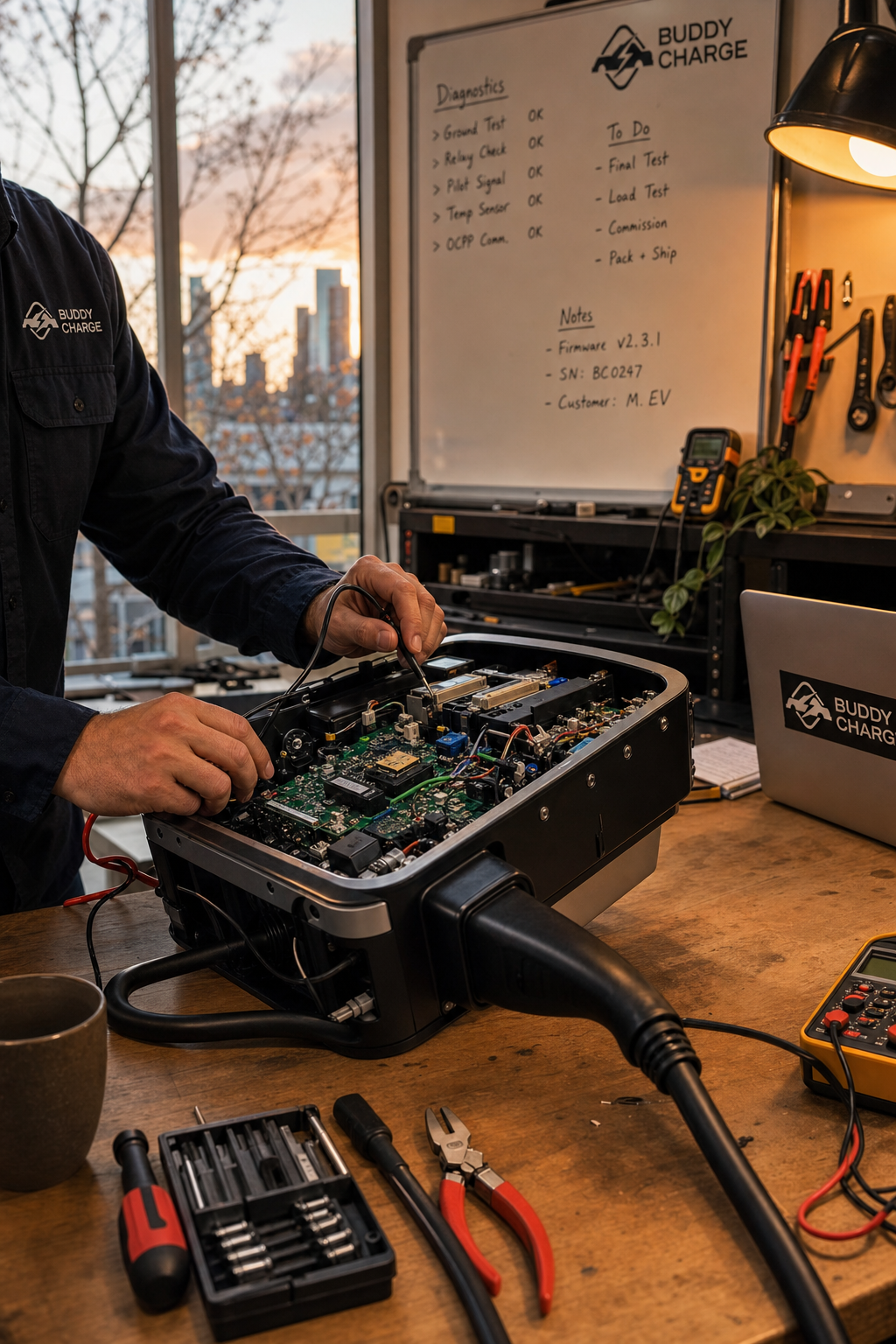
Executing a Melbourne EV charger installation for bidirectional use involves several technical steps beyond a standard wallbox setup. The process begins with securing approval from your local Distributed Network Service Provider (DNSP). For most Melbourne residents, this means coordinating with companies such as United Energy, Jemena, or AusNet. These providers must review the application to ensure the local grid can safely accept the power exported from your vehicle battery.
A switchboard upgrade is often a mandatory part of the installation. Because a bidirectional system effectively turns your car into a generator, your electrical panel must be equipped to handle two way power flows. This typically requires the installation of bidirectional circuit breakers and specialized isolation switches that protect both your home and the utility workers on the grid during maintenance.
For V2G bidirectional charging Australia homeowners must also have a compliant smart meter installed. This device is the critical link that tracks energy flow in real time, enabling your energy retailer to credit you for the power you export. When integrated with solar EV charging, the system utilizes this data to decide when to store energy or sell it back. During a Buddy Charge installation, we verify that your single phase smart charger or DC system communicates perfectly with this meter, ensuring you are ready for market participation from day one.
Will V2G Damage My EV Battery?
Battery health is the primary concern for owners considering a Melbourne EV charger installation. It is important to understand that V2G bidirectional charging Australia operates at much lower stress levels than standard driving or DC fast charging. While public rapid chargers can push over 100kW into a battery, bidirectional discharging typically occurs at a modest 5kW to 10kW. This low discharge rate generates significantly less heat, which is the main factor in battery degradation.
Most systems utilize smart management software to follow the 80 percent rule, keeping the battery state of charge within its healthiest middle range. You can also configure reserve levels to ensure the vehicle always retains enough energy for your daily needs. When combined with solar EV charging, these systems act as a protective layer, balancing grid exports with the physical limits of the cells. While a standard single phase smart charger focuses on inflow, bidirectional units include additional logic to ensure discharging never compromises the 160,000km warranties typical of modern EVs.
As 2026 approaches, V2G technology is set to transform how Australians manage home energy. While the potential to power your house and support the grid is exciting, navigating the technical requirements can be complex. If you want expert help setting up your home infrastructure, Buddy Charge is here to guide you. You might start by exploring a reliable Single Phase Charger to see how quality hardware fits into your current setup. We can help you transition toward a smarter energy future today.