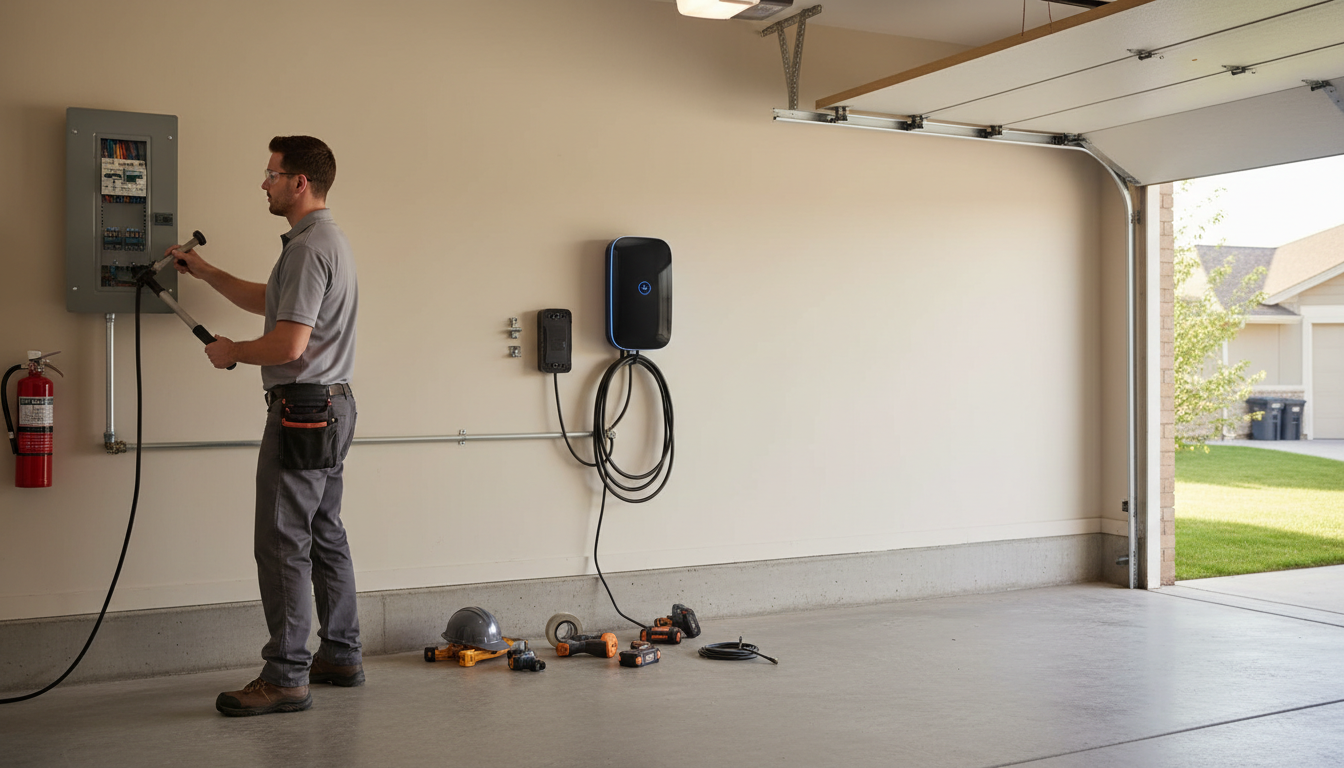
Homeowners must secure a Certificate of Compliance for Electrical Work from a licensed electrician to guarantee EV home charger insurance warranty compliance Australia. This certification is mandatory for making successful insurance claims and keeping manufacturer warranties valid, as unauthorized installations typically void coverage for fire or flood damage.
Installing an EV charger at home should be a straightforward upgrade; however, for many Australian homeowners, it quickly becomes a legal and financial minefield. You might assume a professional installation covers every base, yet a missing Certificate of Electrical Safety or an unapproved device could leave you entirely unprotected during a claim. If your home insurance is denied or your vehicle warranty is voided due to a non-compliant setup, the true cost of going electric suddenly skyrockets. At Buddy Charge, we believe that peace of mind comes from mastering the fine print before the first cable is laid. In this guide, we navigate the critical intersection of Australian electrical standards, insurance policy nuances, and manufacturer warranties. You will learn how to verify compliance, what to demand in a 2026 charger warranty, and why features like dynamic load balancing are essential for long-term property safety.
The Three Pillars of Safe EV Charging: Insurance, Warranty, and Compliance
Melbourne is currently experiencing a rapid surge in electric vehicle ownership. As more residents transition away from internal combustion engines, the conversation often centers on charging speeds and hardware aesthetics. However, focusing solely on how quickly a car reaches full charge overlooks the significant financial and legal risks associated with improper installation.
To navigate this transition safely, homeowners must address the three pillars of EV home charger insurance warranty compliance Australia:
Insurance: This protects your home and contents from fire or electrical damage.
Warranty: This covers the physical charging unit and, crucially, the vehicle's sensitive onboard battery system.
Compliance: This ensures the work meets the AS/NZS 3000:2018 Wiring Rules, protecting your family’s safety and your legal standing.
These pillars are fundamentally interlinked. If an installation lacks the necessary certification, it often triggers a domino effect where both insurance providers and vehicle manufacturers may refuse to honor claims. For those seeking single-phase charging solutions or more complex setups, understanding these requirements is essential. This comprehensive EV charging guide outlines how professional Melbourne EV charger installation serves as the foundation for these three protections, ensuring your investment remains a benefit rather than a liability.
Electrical Compliance: Why Your Certificate of Electrical Safety is Non Negotiable
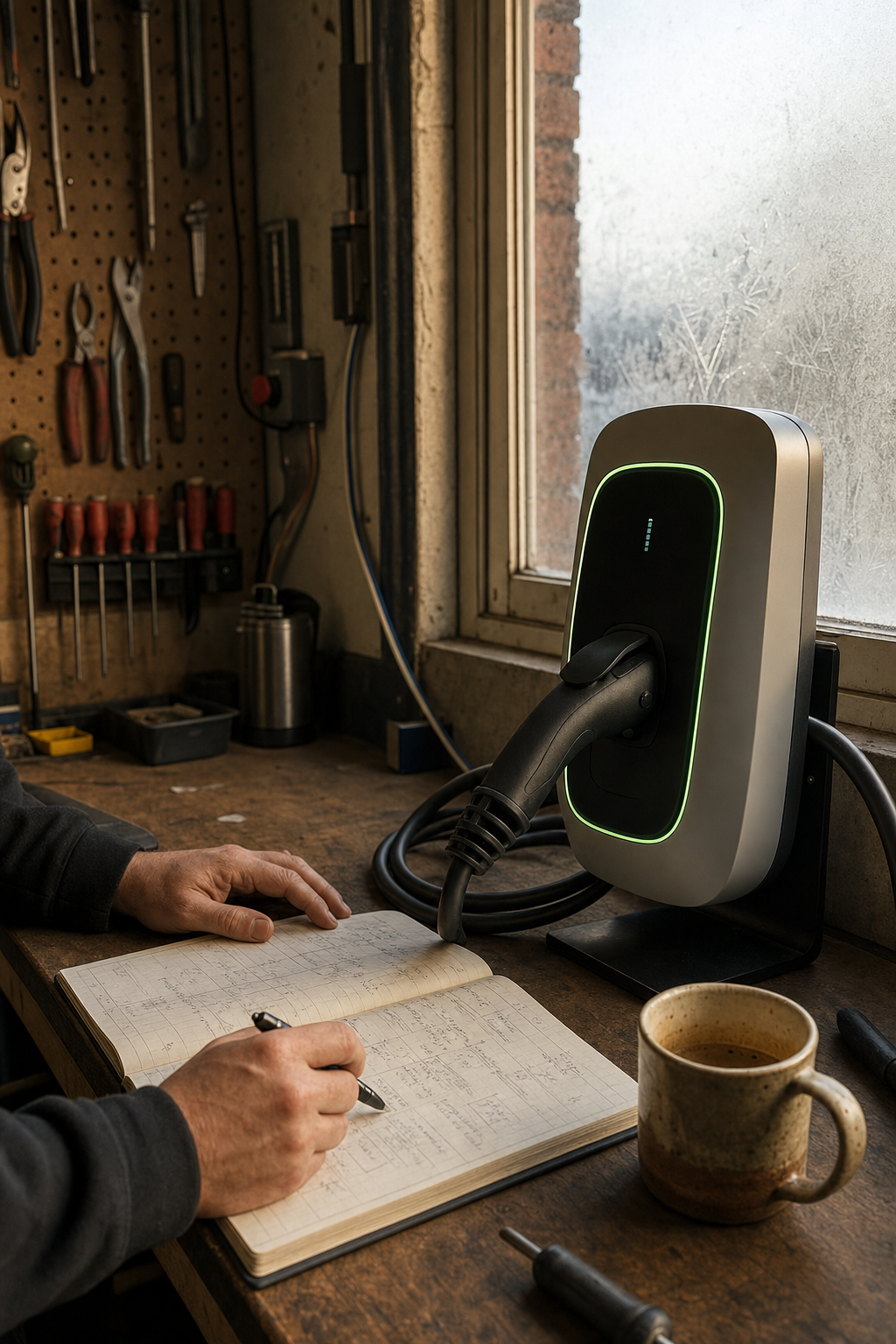
Compliance starts with the Australian Wiring Rules, officially known as AS/NZS 3000:2018. This standard dictates how every cable, circuit breaker, and isolation switch is installed. For an EV charger, which draws significant current for hours at a time, these rules are vital to prevent cable overheating and potential electrical fires. Because EV charging represents a continuous heavy load, the installation must be treated with more technical rigor than a standard power point.
In Victoria, Energy Safe Victoria (ESV) oversees these regulations to ensure public safety. They require that any electrical work be accompanied by a Certificate of Electrical Safety (COES). This certificate is your only legal proof that the installation meets the state's rigorous safety standards. It is important to distinguish this from a standard tax invoice. While an invoice records a financial transaction, only a COES provides the technical assurance required by insurers, vehicle manufacturers, and future property buyers.
To issue a COES, an electrician must be a Registered Electrical Contractor (REC). Using an unlicensed installer or an unqualified technician is more than a safety risk; it is a legal breach that can result in heavy fines and the immediate voiding of your home insurance. When a claim is made involving electrical damage, the first document an insurance investigator will request is the COES. Without it, the homeowner carries the full financial burden of any resulting damage.
For Buddy Charge clients, professional Melbourne EV charger installation includes the lodgement of all necessary paperwork with ESV as a standard part of the service package. We provide the COES directly to the homeowner, ensuring that your property remains compliant and your investment is fully documented. This level of rigor is essential for future proofing, as it provides a clear paper trail should you decide to upgrade your system or sell your home. Maintaining this standard is the foundational step in securing the EV home charger insurance warranty compliance Australia framework mentioned previously.
EV Charger Home Insurance Australia: The Hidden Fine Print
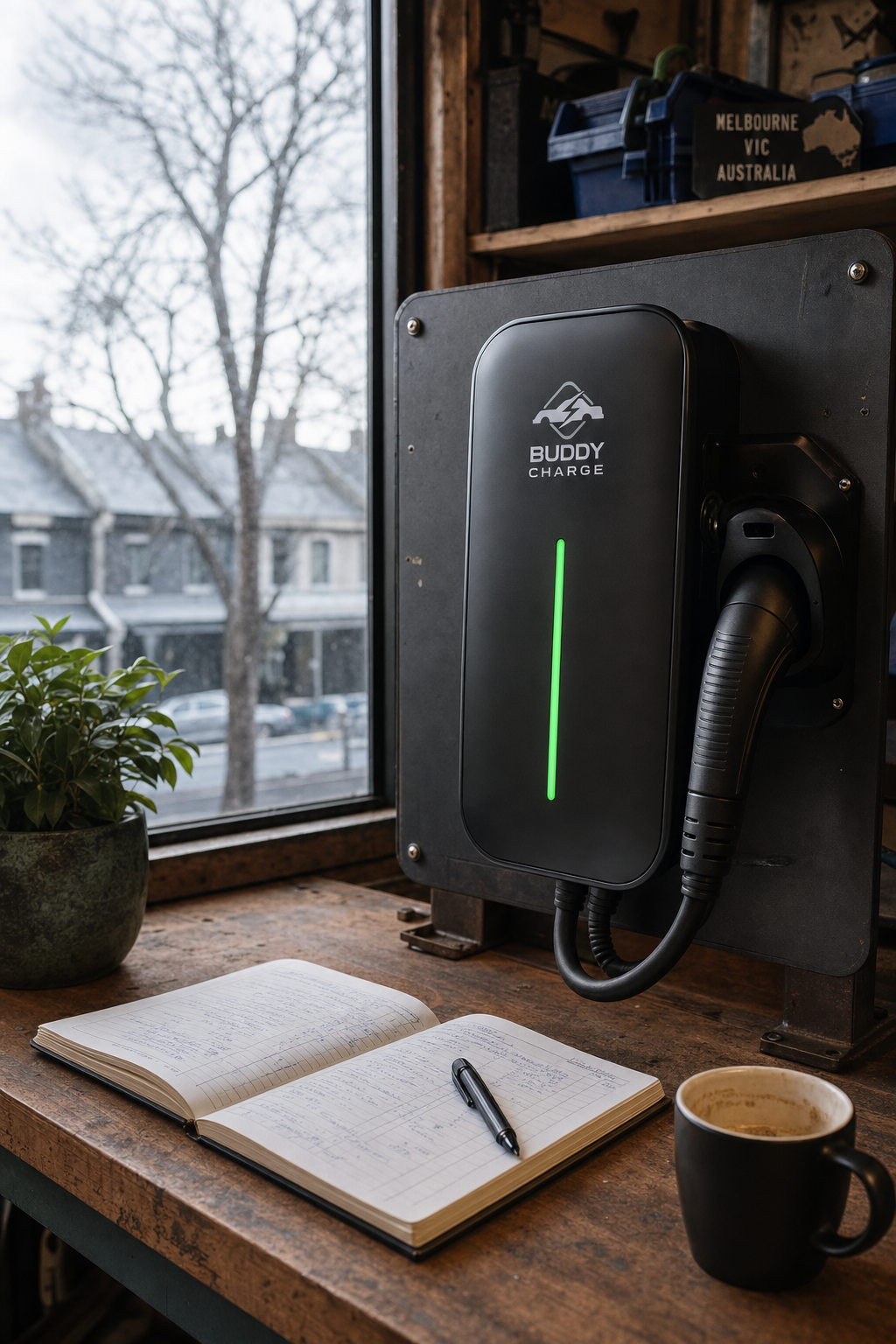
Once you have secured your Certificate of Electrical Safety, the next step is addressing the often overlooked relationship between your charger and your insurance provider. A common misconception among Melbourne homeowners is that their comprehensive car insurance covers the charging hardware. However, investigations into major Australian providers like NRMA and Allianz reveal that car insurance typically only covers the vehicle and potentially a portable charging cable. The wall box itself is usually classified as a building fixture, meaning it falls under your home and contents insurance policy.
You should never assume that a new charger is automatically covered. While some insurers may treat it like any other electrical fixture, others require you to list it as a specified item to ensure you are covered for its full replacement value. It is vital to contact your insurer and disclose the installation in writing. Failing to do so could lead to a 'non-disclosure' complication if you ever need to make a claim related to electrical damage or fire.
The most significant risk involves the 'unlicensed installer' clause found in the fine print of almost every Australian home insurance policy. If a fire occurs and an investigation finds the charger was installed by anyone other than a Registered Electrical Contractor, or if a COES was never issued, the insurer may reject the claim for your entire home. They view uncertified electrical work as a preventable risk that violates the terms of your coverage. Maintaining the EV home charger insurance warranty compliance Australia standards is therefore a matter of total property protection, not just hardware protection.
From a risk perspective, insurers are increasingly looking at the safety features of the hardware itself. Smart chargers, such as those provided by Buddy Charge, offer built-in surge protection and over-temperature monitoring. These systems are designed to shut down safely before a fault can escalate into a fire, making them a lower risk profile for your property. When you invest in a Melbourne EV charger installation that utilizes these intelligent safety protocols, you are providing your insurer with evidence of a professional, low-risk setup.
Does an EV Charger Installation Void Your Car Warranty?
Protecting your home is the first step, but the financial implications of a sub-standard installation extend directly to the vehicle itself. The battery and onboard electrical systems are the most expensive components of any electric vehicle, often costing tens of thousands of dollars to replace. Several major EV manufacturers in Australia explicitly state in their warranty terms that damage caused by non-compliant or unauthorised charging equipment will not be covered. This creates a significant risk for those who bypass professional Melbourne EV charger installation in favor of uncertified hardware.
The core principle at play here is the direct cause rule. If a faulty DIY installation or a low-quality charger causes a voltage surge that fries the car's sensitive onboard charger (OBC), the vehicle manufacturer is not liable for the repair. They are only responsible for manufacturing defects, not for damage introduced by external equipment that fails to meet Australian safety standards. To keep your vehicle warranty intact, you must be able to prove that any fault was not the result of the charging infrastructure.
To ensure your EV home charger insurance warranty compliance Australia status is ironclad, always verify that your hardware meets Australian Standards AS/NZS 3820 and is registered under the Electrical Equipment Safety System (EESS). Compliant chargers will carry the Regulatory Compliance Mark (RCM), a symbol that the unit is safe for use on the Australian grid. Consulting a comprehensive EV charging guide can help you identify these marks of quality. By using certified hardware and a licensed installer, you ensure that any potential vehicle fault remains the responsibility of the manufacturer, not a personal out of pocket expense.
Comparing EV Charger Warranties: What to Look for in 2026
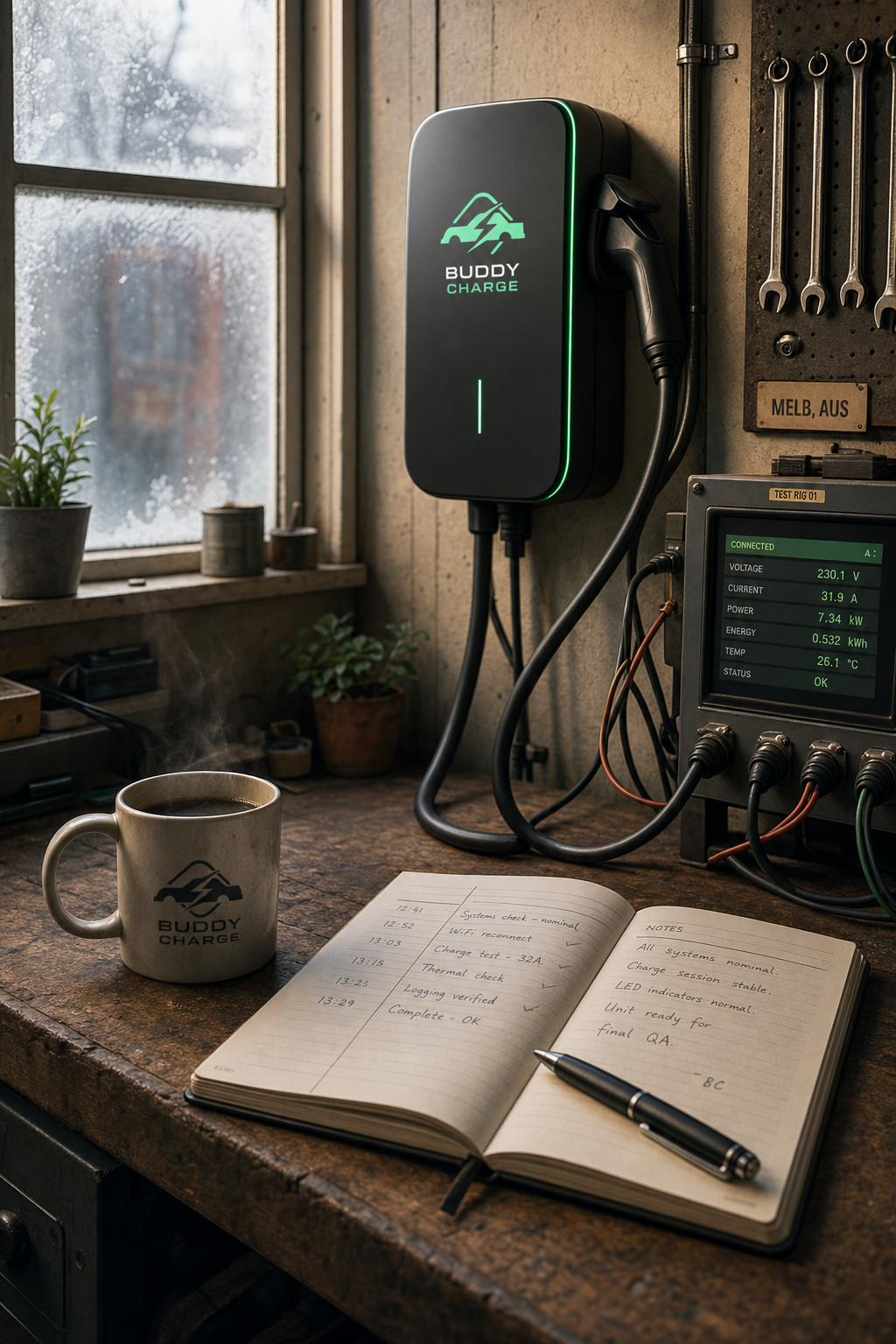
A hardware warranty is only as strong as the company backing it. When performing an EV charger warranty comparison in Australia, the headline duration is often less important than the local infrastructure supporting it. A 5-year warranty provides little comfort if the manufacturer lacks an Australian office; chasing a claim through an overseas entity often leads to communication barriers and high international shipping fees.
When reviewing terms for 2026, homeowners should look for the distinction between parts-only and full-service coverage. Many entry-level warranties exclude the labor costs required to decommission a faulty unit and install the replacement. Since a Melbourne EV charger installation requires a licensed professional for every step, an exclusion on labor can result in unexpected out-of-pocket expenses even when the hardware is replaced for free.
Buddy Charge prioritizes premium hardware with IP65 weather protection, specifically engineered for the high UV and thermal stress of Australian conditions. Because we are a Melbourne-based provider, our clients avoid the risks associated with unrepresented brands that may disappear from the market. Our systems integrate with the broader EV home charger insurance warranty compliance Australia framework by ensuring that if a component fails, the resolution process is local and efficient. Before committing to a unit, verify if the warranty covers transportation costs for faulty hardware, as these specifics separate professional-grade single-phase charging solutions from budget alternatives.
Dynamic Load Balancing: The Compliance Feature for Property Safety
Dynamic load balancing addresses a critical technical gap often overlooked in standard installation quotes. In many established Melbourne suburbs, residential electrical systems were never designed to handle the sustained high current an electric vehicle requires alongside modern appliances. Without this feature, running your air conditioner and induction cooktop while your vehicle charges can easily exceed the main breaker's capacity. This leads to frequent power trips or, in more serious scenarios, cumulative heat damage to the switchboard wiring.
A smart Melbourne EV charger installation uses dynamic load balancing to monitor the real time energy consumption of your entire property. If domestic demand spikes, the system instantly throttles the charger’s power draw to keep total usage within safe limits. This technology is particularly vital for homeowners choosing single-phase charging solutions on limited service fuses. From an insurance perspective, this proactive management significantly reduces the risk of electrical fires caused by thermal stress on aging infrastructure. By ensuring your home's electrical system is never pushed past its physical limits, you reinforce the safety pillar of your EV home charger insurance warranty compliance Australia strategy. For more technical specifications on how these systems operate, refer to our comprehensive EV charging guide.
The Homeowners Checklist Before Installing an EV Charger
To ensure your property meets the standards for EV home charger insurance warranty compliance Australia, follow this practical checklist before finalizing any agreement:
Verify the installer is a Registered Electrical Contractor (REC). Only an REC can legally conduct a Melbourne EV charger installation and issue the required safety documentation.
Check for the Regulatory Compliance Mark (RCM) on the charger. This confirms the hardware meets Australian safety standards and is legal for use on our grid.
Request a written quote that specifically includes the lodgement of a Certificate of Electrical Safety (COES) once the work is complete.
Call your home insurance provider to list the charger as a fixture or specified item, ensuring your building and contents policy is updated.
Confirm the charger warranty includes Australian based support and covers local labor costs for any necessary replacements.
Consult a comprehensive EV charging guide to determine if single-phase charging solutions are appropriate for your home's existing electrical load and switchboard capacity.
Protecting your home EV charger requires balancing compliance, manufacturer warranties, and insurance coverage. Understanding these standards ensures your investment remains safe and legally sound. While managing these technical details may feel overwhelming, you do not have to handle them alone. If you want expert help ensuring your setup meets all Australian regulations, a professional Installation is a natural next step. Our team can guide you through the process; ensuring your charger is safe, compliant, and ready for years of reliable use.