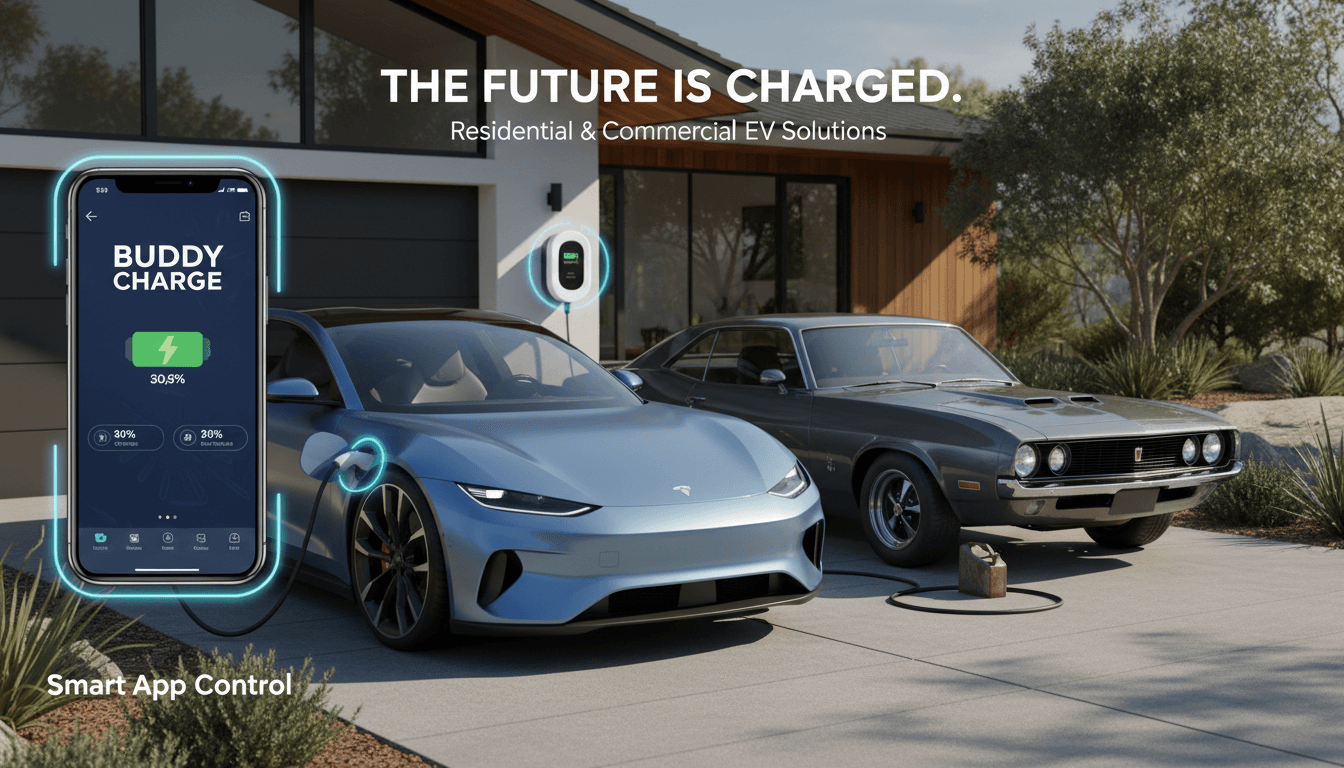
Debunking common home EV charger myths Australia reveals that standard wall outlets are often too slow for modern needs and that specialized chargers are perfectly capable of handling the local climate. Homeowners can avoid unnecessary costs by opting for professional installation and solar-compatible units, which provide faster charging and greater energy efficiency than basic trickle cables.
Navigating the transition to electric driving in Australia often feels like wading through a sea of conflicting advice and outdated warnings. Many homeowners find themselves stalled by the fear of massive electrical bills, complex three phase upgrades, or safety concerns that simply do not reflect modern charging technology. These misconceptions do more than cause hesitation; they lead to inefficient setups that waste your time and drain your budget. As Australia moves toward a greener grid, understanding the reality of home infrastructure is essential for any savvy EV owner. In this guide, we dismantle seven common myths surrounding home EV chargers. From the hidden costs of trickle charging to the truth about outdoor durability in our harsh climate, you will learn how to optimize your home setup for speed, safety, and long term value.
Why Home EV Charging Misconceptions Persist in Australia
Electric vehicle adoption in Melbourne and across Australia has transitioned from a niche trend to a mainstream shift. As more drivers swap petrol for electrons, a significant gap has emerged between owning the car and understanding how to power it effectively at home. Much of the information circulating online is either outdated or imported from overseas markets with vastly different grid configurations and electrical standards. Australian homes have specific requirements, particularly regarding thermal management in our climate and integration with local solar arrays.
At Buddy Charge, we encounter various home EV charger myths Australia homeowners face on a daily basis. These misconceptions often result in people settling for inefficient charging setups or, conversely, over-investing in infrastructure they do not actually need. We are moving beyond the generic debate of whether an EV is worth the investment. The real question for modern homeowners is whether their charging setup is safe, fast, and future-proof.
By providing expert Melbourne EV charger installation services, we aim to clarify the technical nuances that generalist advice often misses. This guide dismantles the common errors that prevent Australians from getting the most out of their electric vehicles, focusing on practical data rather than outdated assumptions.
Myth 1: The Portable Trickle Charger is All You Need
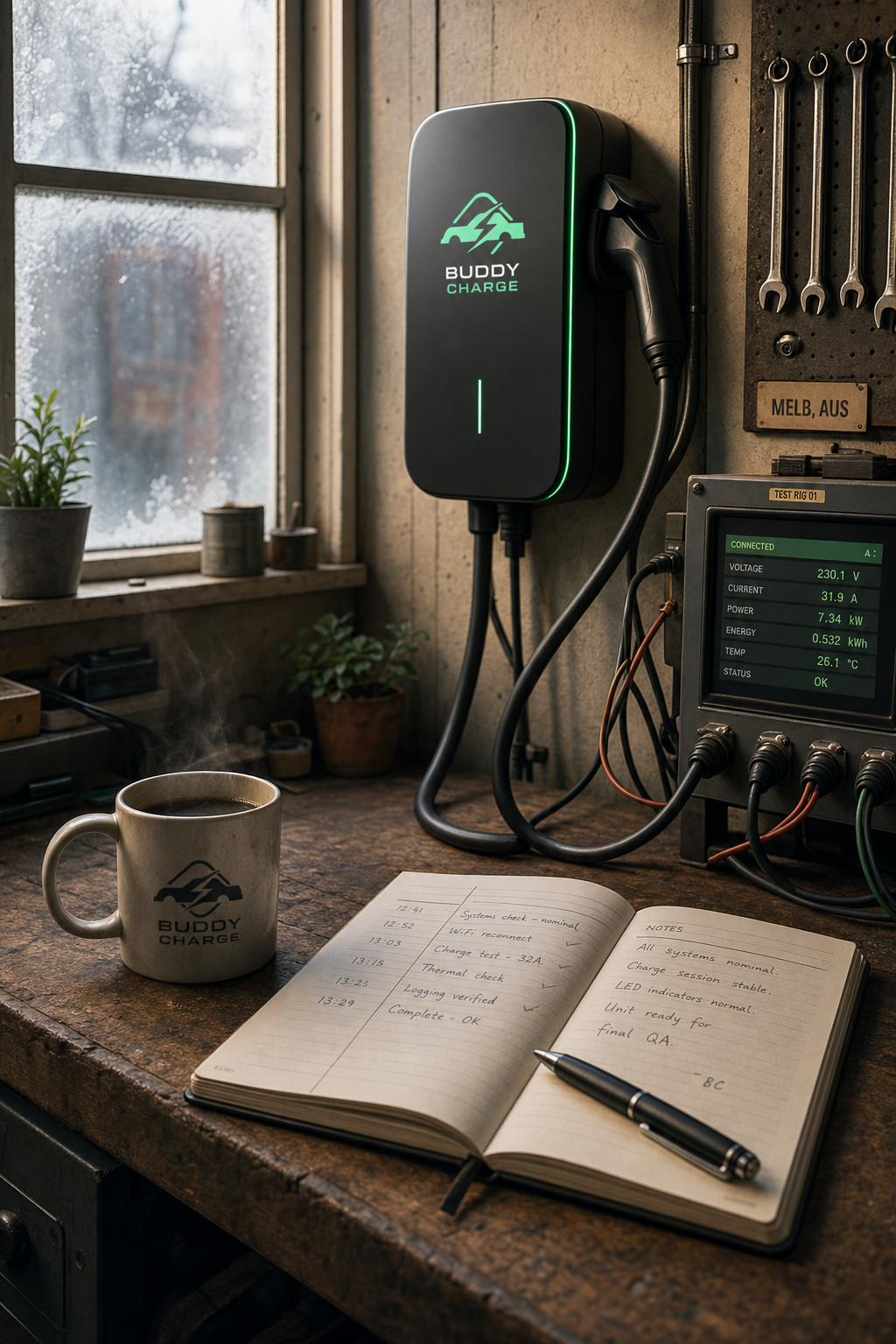
Starting with the most prevalent assumption, many new EV owners rely initially on the portable charging cable supplied with their vehicle, often referred to as a "granny cable." While this is a convenient backup, relying on it as a primary charging source is one of the most common home EV charger myths Australia drivers encounter. Data from the RAA highlights the stark reality of efficiency; a standard 10A domestic outlet typically requires 26 hours or more to achieve a full charge for a modern EV. In contrast, a dedicated 7.2kW smart charger reduces this window to roughly 7 to 9 hours, allowing for a complete overnight replenishment.
The limitations extend beyond mere speed. Household power points are generally designed for intermittent use rather than the continuous, high-current draw required to charge a large battery. Drawing 10 amps for over 24 hours creates significant thermal stress on the internal wiring and the socket itself. Over time, this heat buildup can lead to melted components or electrical failure. A dedicated charging system installed via professional Melbourne EV charger installation services uses heavy-duty cabling and circuitry specifically engineered for long-duration loads, significantly enhancing property safety.
Charger Type | Estimated Full Charge Time | Current Load Capability |
|---|---|---|
Portable 10A (Trickle) | 26+ Hours | 2.3kW |
Dedicated Smart Charger | 7-9 Hours | 7.2kW |
Portable units remain useful for road trips or emergencies in remote Victorian regions where infrastructure is sparse. However, for a Melbourne lifestyle, they lack the smart functionality needed to optimize energy usage. They cannot communicate with your home grid or automatically adjust to off-peak rates, making them a temporary fix rather than a sustainable, long-term solution.
Myth 2: Dedicated EV Chargers Are a Major Fire Risk
Safety concerns often stem from sensationalized headlines, but the data paints a clearer picture for Australian homeowners. Research from the Electric Vehicle Council and Fire and Rescue NSW indicates that electric vehicles are statistically much less likely to catch fire than traditional internal combustion engine cars. When addressing home EV charger myths Australia residents encounter, it is vital to distinguish between the vehicle and the charging equipment. A dedicated, premium charger is not a hazard; it is a sophisticated safety device.
A high-quality charging system includes safety features that standard domestic outlets simply do not possess. These units are equipped with over-temperature monitoring, integrated surge protection, and emergency stop buttons to instantly cut power if a fault is detected. While a standard 10A socket may struggle under the continuous thermal stress of charging a car, a dedicated unit is built to handle high-current loads safely over many years.
A professional Melbourne EV charger installation services actually lowers your property’s risk profile. Our technicians install specialized DC leakage protection and use cabling specifically rated for continuous duty. This ensures that the high-power draw is confined to a circuit designed for it, rather than stressing the existing household wiring that was never intended for such heavy, long-term use.
Myth 3: You Must Upgrade to Three Phase Power for Fast Charging
A common point of confusion for Victorian homeowners is the belief that a 22kW three-phase connection is a prerequisite for effective home charging. This is one of the more expensive home EV charger myths Australia property owners encounter, as it often leads to unnecessary spending on grid upgrades and switchboard modifications that can cost thousands of dollars. In reality, the vast majority of Australian homes are equipped with single-phase power, which is perfectly capable of meeting modern driving demands.
A standard 7.2kW single phase charger options setup provides approximately 40 to 50 kilometers of range for every hour of charging. Given that the average Australian daily commute is significantly less than 50 kilometers, a car plugged in overnight for eight hours will replenish between 320 and 400 kilometers of range. For almost every driver, this more than covers a full week of commuting in a single overnight session.
The speed of your charge is also dictated by the vehicle itself, not just the wallbox. Every electric vehicle has an onboard charger that limits how much AC power it can accept. Many popular models are capped at 7kW or 11kW. If your car is limited to 7kW, installing a 22kW three-phase system will not charge the vehicle any faster; the car simply ignores the extra capacity.
Power Configuration | Typical Output | Range Added Per Hour | Common Requirement |
|---|---|---|---|
Single-Phase | 7.2kW | 40 - 50 km | Standard Residential |
Three-Phase | 11kW | 60 - 75 km | High-end EVs / Large Batteries |
Three-Phase | 22kW | 100 - 120 km | Multi-car / Commercial |
Choosing 3 phase charger installations usually makes sense only if you own multiple EVs that need to charge simultaneously, or if your property already has three-phase power for heavy machinery or large-scale air conditioning. For the typical Melbourne household, sticking with a high-quality single-phase smart charger is the most cost-effective and practical way to future-proof your property without the headache of a grid upgrade.
Myth 4: Smart Chargers are an Unnecessary Expensive Gimmick
Dismissing smart chargers as an overpriced luxury is one of the most persistent home EV charger myths Australia faces. In the Victorian market, "smart" denotes far more than just phone app control. It refers to the intelligence required to manage complex energy costs. A smart unit allows homeowners to automate charging schedules to align with off-peak electricity windows, often between midnight and early morning, when rates are significantly lower. This automation can reduce running costs by hundreds of dollars annually compared to plugging in manually during evening peaks.
For many Melbourne professionals, these data logging capabilities are essential for managing novated leases and Fringe Benefits Tax exemptions. Smart systems provide precise, downloadable energy usage reports that serve as verifiable tax records. This is a task that is nearly impossible with a basic, non-connected charger. Furthermore, Wi-Fi and Bluetooth connectivity facilitate remote firmware updates, ensuring hardware remains compatible with evolving vehicle software. By integrating with the local grid and home solar, these systems ensure your Melbourne EV charger installation services provide a future-proof asset rather than a static plug.
Myth 5: Charging an EV Will Blow Your House Fuses
Homeowners often worry that adding a high-power EV charger will overload their electrical system, particularly during a Melbourne summer when air conditioning units are running at full capacity. This fear of tripping the main circuit breaker is a frequent version of the home EV charger myths Australia residents encounter; however, it stems from an understanding of older, non-integrated technology. In properties with limited spare electrical capacity, a basic charger could theoretically push the system over its limit if several high-draw appliances are active at once.
Buddy Charge addresses this risk through Dynamic Load Balancing (DLB). Rather than drawing a static, high current regardless of what else is happening on the property, our smart systems utilize a dedicated sensor at the main switchboard to monitor total household demand in real-time. If you turn on the oven and the pool pump simultaneously, the charger detects the reduced headroom and automatically throttles its power draw to a safe level.
Once household demand drops, the system immediately restores the maximum possible charging speed. This intelligent oversight, provided through expert Melbourne EV charger installation services, ensures that your vehicle charges efficiently without risking a blackout or damaging your infrastructure. It effectively allows homeowners to enjoy fast charging without the immediate necessity of an expensive and time-consuming grid connection upgrade.
Myth 6: Australian Weather is Too Harsh for Outdoor Chargers
Melbourne residents are well-acquainted with the 'four seasons in one day' phenomenon, which often fuels the concern that external charging hardware cannot survive the local climate. This contributes to one of the most persistent home EV charger myths Australia homeowners encounter, the belief that chargers must be sheltered inside a garage to remain functional. In reality, hardware designed for the Australian market carries specific Ingress Protection (IP) ratings to handle these exact conditions.
A high-quality unit should feature an IP65 rating, meaning it is completely dust-tight and protected against water jets from any angle. While cheap, generic imports often lack UV-stabilization or sufficient thermal dissipation, Buddy Charge systems are engineered for 40-degree-plus summer days. Inferior units can suffer from plastic degradation or internal component failure when exposed to direct Australian sun. By utilizing premium Melbourne EV charger installation services, property owners receive hardware that incorporates industrial-grade seals and thermal management systems, ensuring reliable performance despite Victoria's volatile weather patterns.
Myth 7: Any Local Electrician Can Install an EV Charger
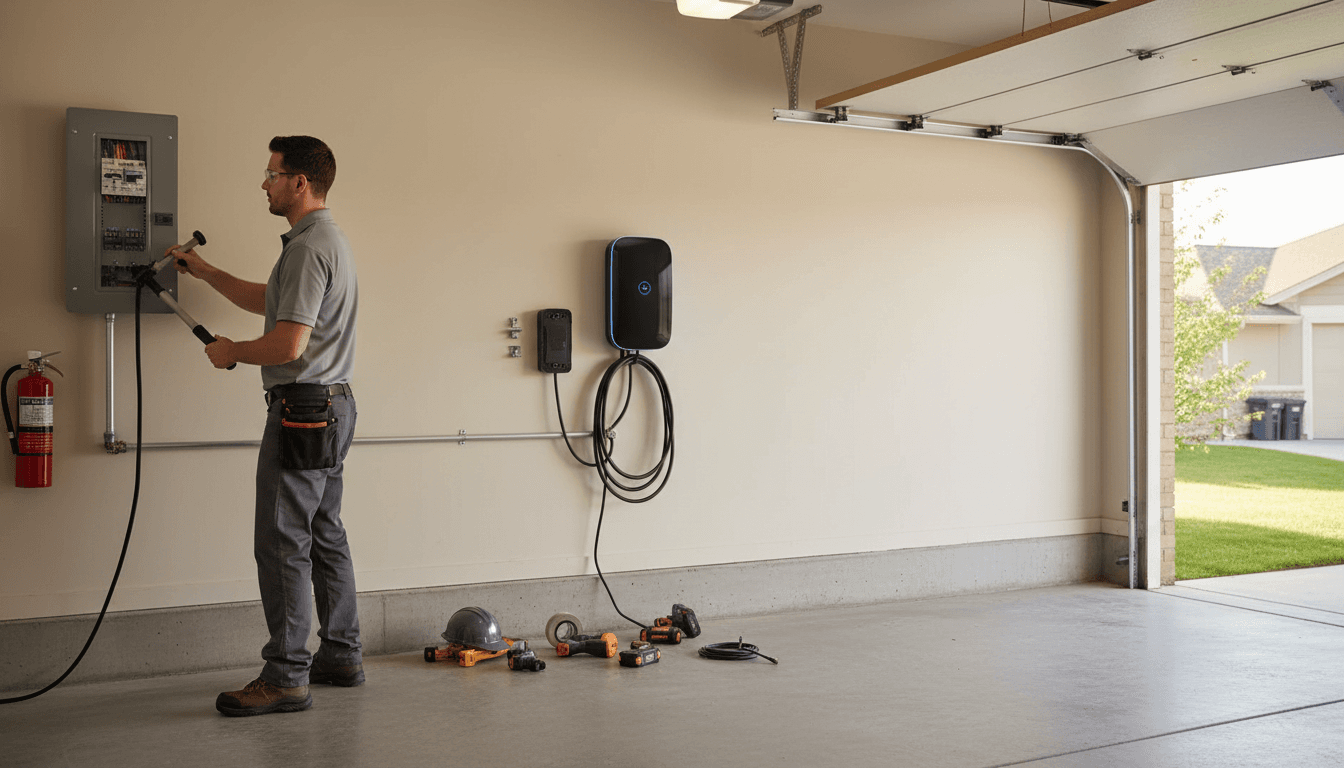
Even if a unit is rated for the outdoors, the final pillar of safety rests on how it is integrated into your home switchboard. Legally, any licensed electrician can perform the work, but installing a dedicated charging system involves more than just running a cable. This leads to one of the final home EV charger myths Australia property owners believe: that general electrical knowledge is sufficient for specialized EV infrastructure. An electric vehicle represents a continuous high-load device that places unique stress on a home's electrical system for hours at a time. This requires precise cable sizing to prevent voltage drop and thermal degradation, along with specific knowledge of DC leakage protection.
Generalists may overlook the requirement for Type B RCDs or the nuances of software commissioning for Wi-Fi, Bluetooth, and RFID access. Furthermore, DIY installation is strictly illegal in Australia and will void your home insurance policy in the event of a fault. Engaging Melbourne EV charger installation services ensures your system is configured to local Victorian standards. Specialists like Buddy Charge understand the specific capacity of Melbourne's residential grids, ensuring that your single phase charger options or 3 phase charger installations are safe, compliant, and optimized for long-term performance.
Dispelling these common myths is the first step toward a more efficient and cost effective home charging experience. While navigating the technical side of Australian power standards can feel overwhelming, you do not have to make these decisions alone. If you want expert help to find the right setup for your home, our team is here to guide you. For many residential properties, starting with a reliable Single Phase Charger is a practical and efficient choice that balances performance with simple installation.