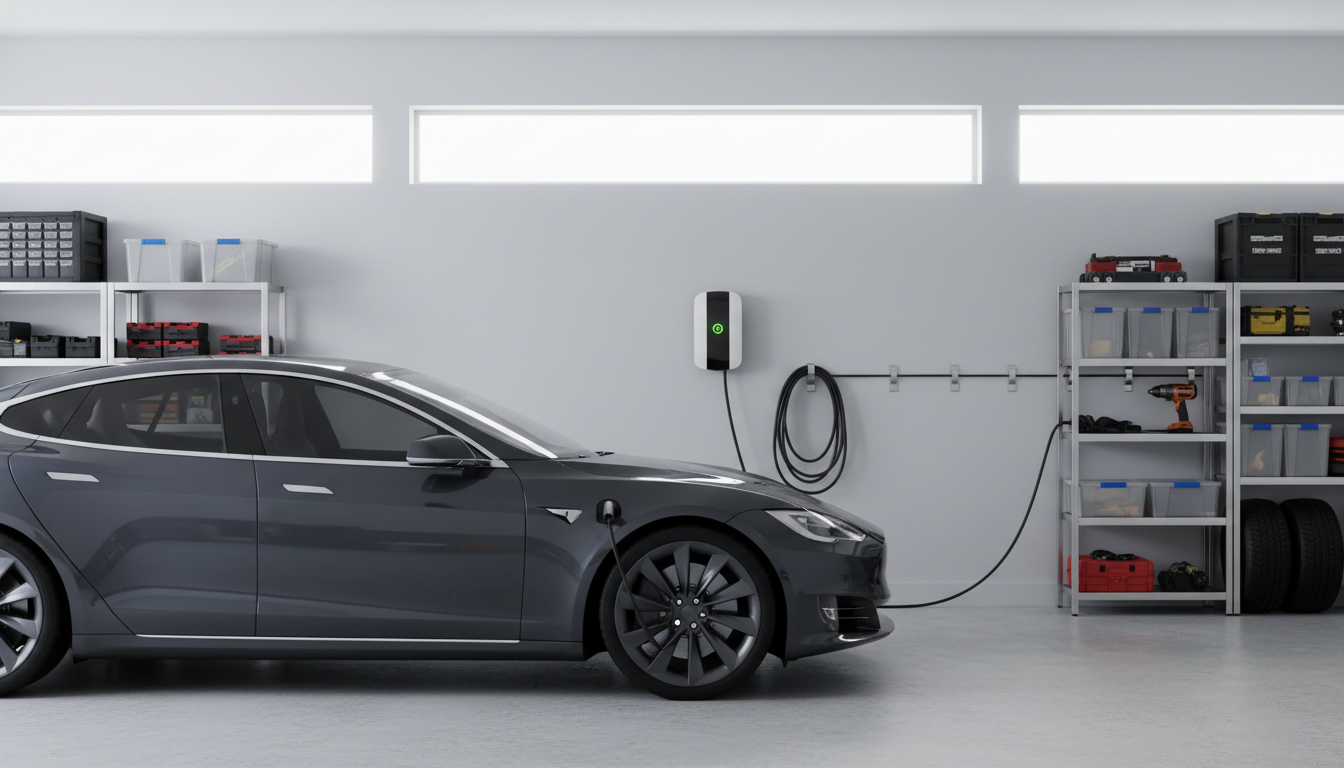
Employees can significantly reduce running costs through an EV novated lease home charging Australia setup by applying the 2026 ATO shortcut rate of 5.47 cents per kilometer to their electricity expenses. While eligible electric vehicles and their charging costs generally benefit from FBT exemptions, the installation of home charging hardware is typically treated as a separate, taxable benefit. This arrangement allows drivers to package both the car and its energy costs into a single tax-effective payment to maximize savings.
Navigating the transition to an electric vehicle via a novated lease promises significant tax advantages, yet many Australian drivers find themselves bogged down by the complexities of home charging logistics. The core challenge lies in accurately tracking energy consumption to satisfy ATO reporting requirements while ensuring your home setup is fully optimized for maximum savings. Getting this right is the difference between a seamless ownership experience and a mountain of administrative paperwork. In this guide, we break down the critical 2026 tax landscape, including the 5.47 cent per kilometer shortcut method and the legalities of bundling your charger into your lease package. You will discover how smart charging hardware ensures compliance and how solar integration can further slash your running costs. Whether you are in Melbourne or beyond, we provide the practical roadmap needed to master your EV home charging strategy.
The Rise of EV Novated Leasing in Australia for 2026
Australia's electric vehicle market has undergone a significant transformation, primarily driven by federal incentives aimed at accelerating zero-emission adoption. The cornerstone of this shift is the Fringe Benefits Tax (FBT) exemption for eligible electric cars, which has turned novated leasing into a "secret deal" for Australian employees. This policy allows for the vehicle and its running costs to be paid using pre-tax income, bypassing the usual tax penalties associated with salary packaging a petrol or diesel car.
While the vehicle itself receives the most attention, the underlying EV novated lease home charging Australia strategy is where the long term value is truly realized. Selecting the right vehicle is only half the battle; the speed, safety, and data accuracy of your home setup dictate your ongoing savings and compliance. Many drivers initially rely on basic portable cables, but these lack the sophisticated monitoring required to track electricity usage accurately for tax purposes.
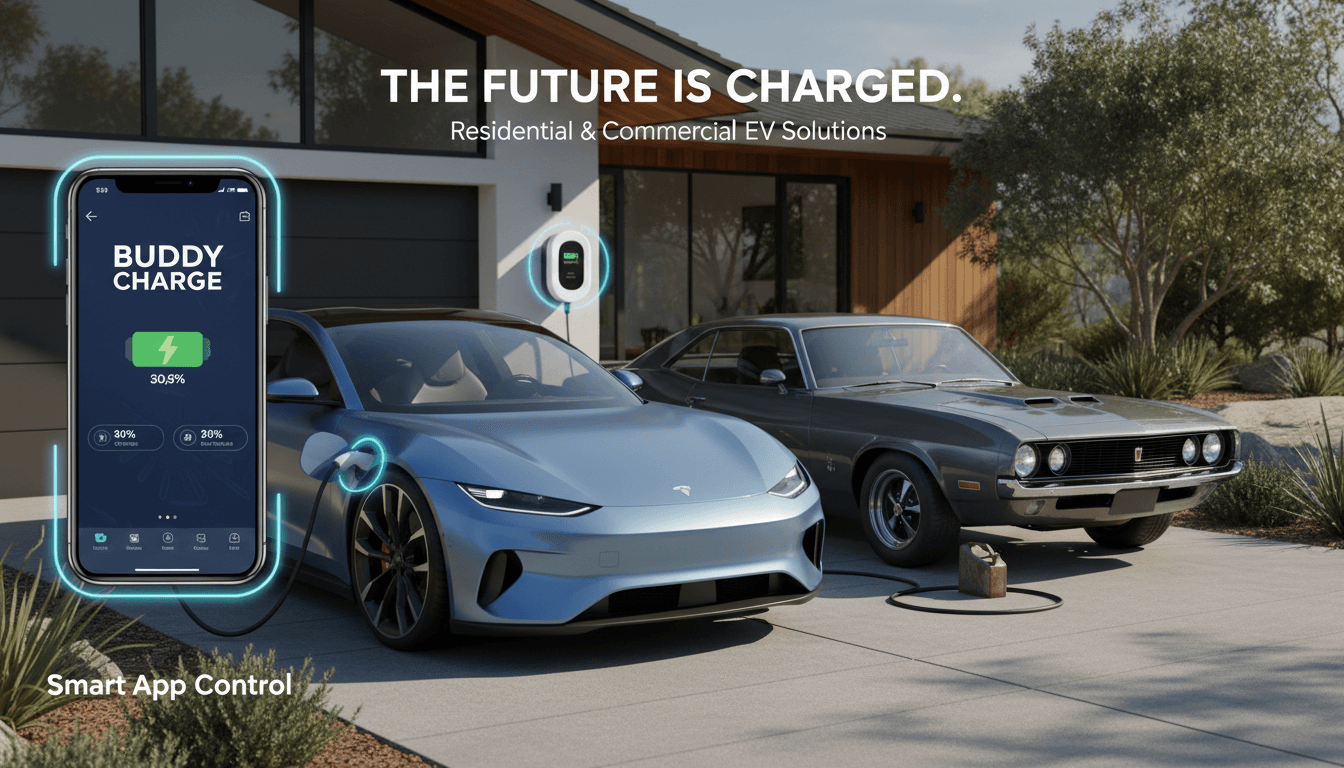
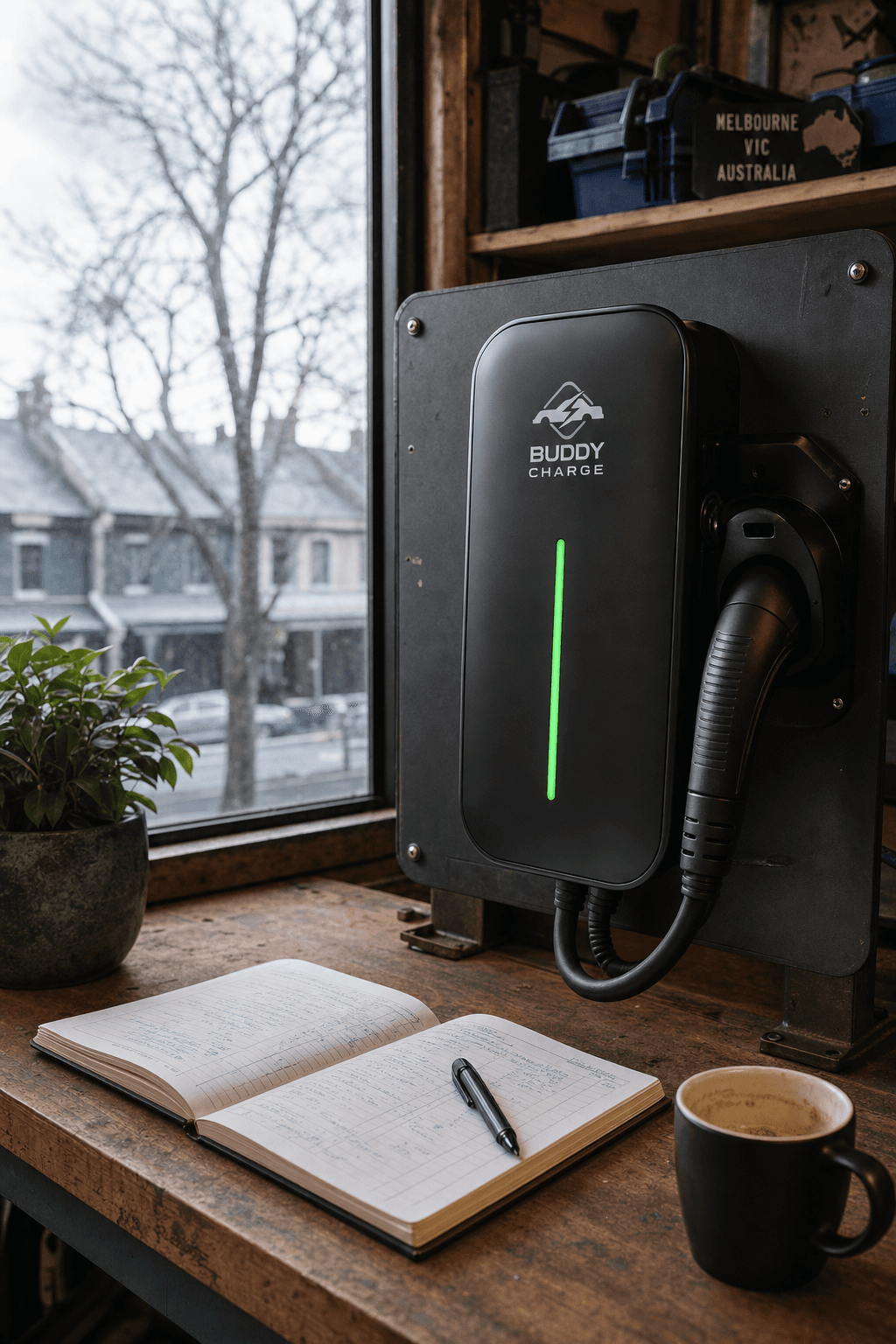
Buddy Charge serves as the local Melbourne expert, helping drivers navigate the hardware side of these arrangements. We provide Melbourne EV charger installation services that focus on high performance, smart-connected systems. By installing a dedicated, intelligent charger, you ensure your property is ready to support a leased asset while gaining the reporting tools necessary to satisfy employer reimbursement requirements and maximize your FBT-exempt benefits.
Understanding the ATO EV Home Charging Rate: The 5.47c per Kilometre Shortcut
The transition from tracking every kilowatt-hour to a simplified distance-based claim has changed the financial landscape for EV drivers. For many years, the administrative burden of separating household electricity from vehicle charging was a barrier to maximizing lease benefits. The Australian Taxation Office (ATO) addressed this by introducing the Shortcut Method, a streamlined approach that bypasses utility bills entirely.
Starting April 1, 2026, the ATO is increasing the EV home charging rate from 4.2 cents to 5.47 cents per kilometre. This calculation relies solely on odometer readings recorded at the start and end of the FBT year. For a driver covering 15,000 kilometres annually, this represents a tax-free reimbursement of $820.50. Because this rate is fixed, it creates a unique financial opportunity for those with efficient home setups. If you utilize solar EV charging or off-peak tariffs where the actual cost per kilometre is closer to 2 or 3 cents, you are essentially receiving a higher reimbursement than your actual expenditure.
Annual Distance | Reimbursement at 4.2c/km | Reimbursement at 5.47c/km (From April 2026) |
|---|---|---|
10,000 km | $420.00 | $547.00 |
15,000 km | $630.00 | $820.50 |
20,000 km | $840.00 | $1,094.00 |
25,000 km | $1,050.00 | $1,367.50 |
While the Shortcut Method is convenient, it is not always the most profitable choice for every driver. Those in properties without solar, or drivers who frequently charge during peak grid periods, may find their actual costs exceed the 5.47c threshold. In these scenarios, the Actual Cost method remains an option. However, choosing this route necessitates a dedicated smart charger. Unlike basic portable units, Buddy Charge systems provide the integrated Wi-Fi connectivity and detailed reporting logs required to satisfy employer compliance for an EV novated lease home charging Australia strategy. This data ensures every cent spent on grid power is accurately captured and eligible for reimbursement through your salary sacrifice arrangement.
Can You Include an EV Charger in a Novated Lease?
One of the most frequent questions we encounter at Buddy Charge is whether the wallbox and its installation can be bundled into the novated lease alongside the vehicle. While it seems logical to include the charger as a running cost, the current ATO interpretation classifies permanent home charging hardware as a separate benefit rather than a vehicle component. If the cost of the hardware and installation exceeds $300, it is generally subject to Fringe Benefits Tax. For most employers, this makes bundling the hardware financially unattractive because the FBT liability can effectively double the cost of the unit.
Most savvy drivers realize that the most strategic move is to pay for their Melbourne EV charger installation out-of-pocket. By using a small portion of the significant tax savings generated by the FBT-exempt car lease itself, you can secure a permanent, high-performance solution without complicating your salary sacrifice agreement. This approach keeps your lease clean and avoids the high FBT rates associated with non-exempt benefits.
Feature | Portable "Emergency" Charger | Buddy Charge Smart System |
|---|---|---|
Charging Speed | 2.3kW (Slow) | 7.2kW to 22kW (Fast) |
Safety Features | Minimal; risk of socket wear | Surge protection; thermal monitoring |
Power Requirements | Standard 10A/15A outlet | Dedicated circuit; load balancing |
Intelligence | Basic or none | Wi-Fi; Bluetooth; App reporting |
While a lease provider may include a portable charging cable with the vehicle, these are not designed for the rigours of daily use. They lack the sophisticated safety features, such as dynamic load balancing, and the reporting capabilities required for an effective EV novated lease home charging Australia strategy. Investing in dedicated single-phase charging options ensures your home infrastructure is as advanced as the vehicle you are leasing.
Why Smart Home Charging is Essential for Lease Compliance
Opting for the actual cost method of reimbursement requires a level of precision that standard power outlets simply cannot provide. While the ATO shortcut method is convenient, drivers in high-tariff areas or those without solar often find that tracking every kilowatt-hour results in a more favorable financial outcome. To satisfy employer compliance and fleet management audits, you must present accurate, verifiable data. This is where a dedicated smart system becomes a necessity for an EV novated lease home charging Australia strategy.
Buddy Charge systems are engineered with integrated Wi-Fi and Bluetooth connectivity, allowing the charger to act as a smart meter specifically for your vehicle. Through our dedicated app, drivers can generate and export detailed usage reports that show exact energy consumption per session. This digital paper trail removes the guesswork for payroll departments, ensuring that your claims for pre-tax reimbursement are backed by hard data rather than estimates. Unlike basic portable cables, these intelligent systems provide the professional-grade telemetry required for modern corporate tax reporting.
Beyond data, compliance also involves protecting the physical infrastructure of your home. Charging a high-capacity leased asset for several hours can put significant strain on a residential electrical panel. To mitigate this risk, our single-phase charging options include dynamic load balancing. This technology monitors the real-time power draw of your entire household; if you activate a heavy appliance like an oven or air conditioner, the charger instantly scales back its output. This proactive safety feature prevents tripped breakers and electrical overloads, ensuring your home remains safe while your vehicle stays topped up.
Maximising Your Novated Lease Savings with Solar Integration
Melbourne homeowners with existing solar arrays can achieve a significant financial advantage by aligning their charging sessions with peak solar production. When using a Buddy Charge system with solar EV charging capabilities, the actual energy cost per kilometre can drop to effectively zero. Despite this, the ATO Shortcut Method still allows you to claim the flat 5.47c/km rate based on your odometer. This creates a powerful double dip effect: you eliminate your charging expenses while simultaneously reducing your taxable income through your EV novated lease home charging Australia strategy. This bypasses the need to use pre-tax dollars for grid power, keeping more money in your pocket.
Selecting the right hardware is essential for Victorian home configurations. Most suburban properties in Melbourne utilize a single-phase connection. Our single-phase charging options provide 7.2kW of power, which is ideal for standard solar exports and overnight charging. For properties with larger solar arrays or three-phase power, upgrading to a 22kW system allows for rapid energy capture during the middle of the day. This ensures you can fill your battery entirely from excess solar before the sun sets, maximizing your independence from the grid.
System Type | Max Power Output | Recommended Setup |
|---|---|---|
Single-Phase | 7.2kW | Standard residential homes with typical solar arrays |
Three-Phase | 22kW | Large solar setups or high-mileage drivers needing fast top-ups |
Installation Requirements for Novated Lease Drivers in Melbourne
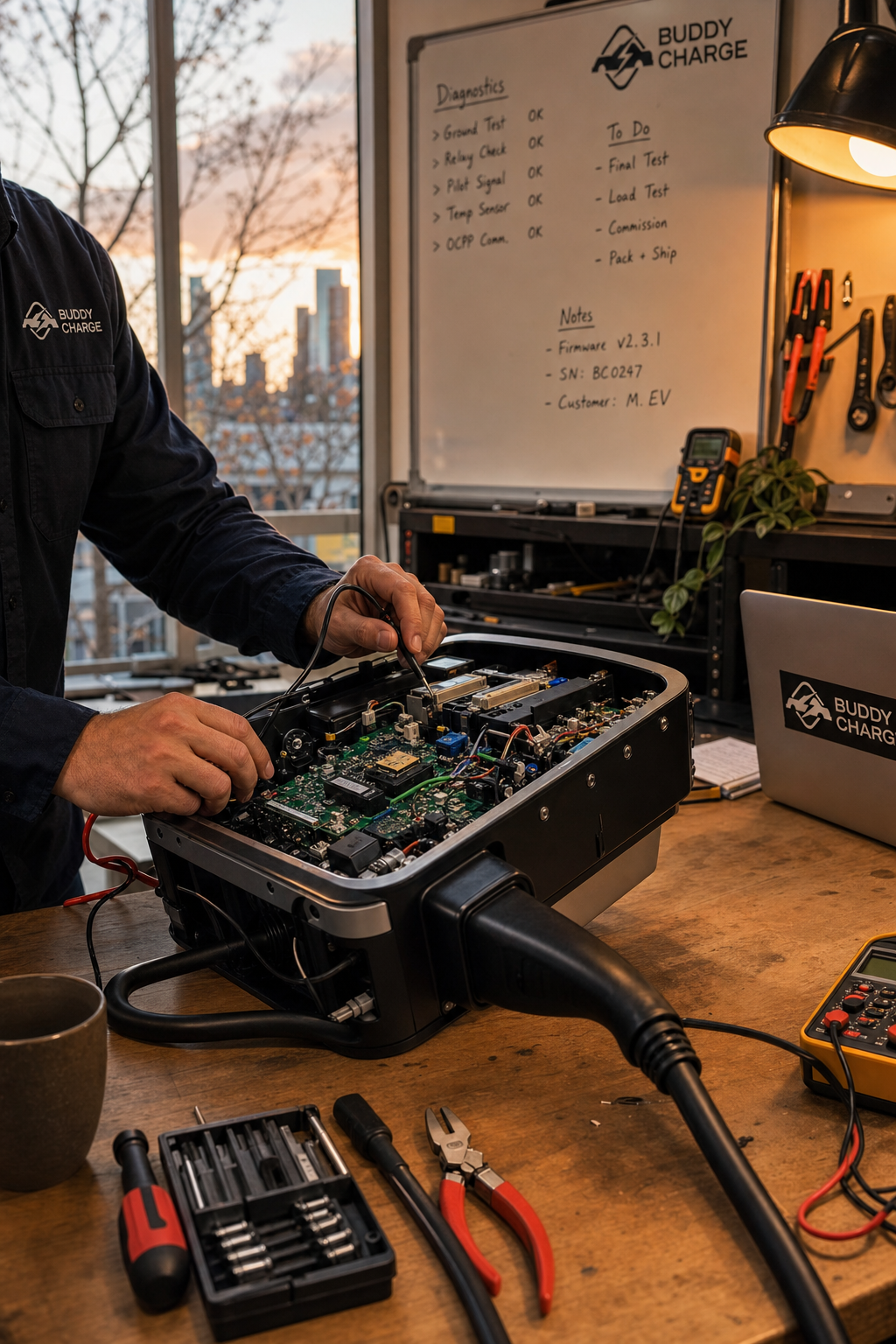
Securing the financial benefits of an EV novated lease home charging Australia strategy requires more than just picking a charger; the physical installation must meet rigorous Victorian standards to protect your leased asset and property. In Melbourne, where environmental conditions shift rapidly, hardware must be rated for IP65 weather protection. This ensures the internal electronics remain sealed against dust and heavy rain, which is vital for units mounted in carports or on external walls.
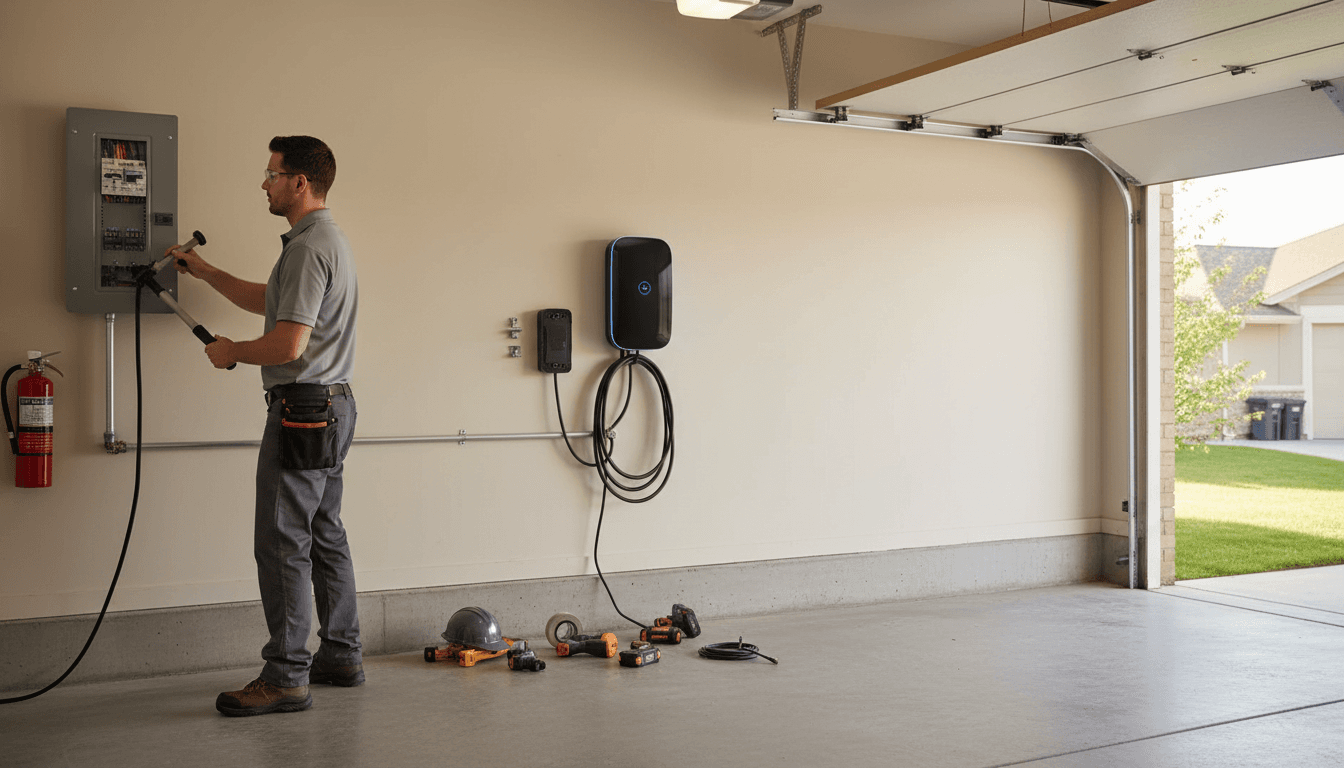
The process begins with a comprehensive site audit. Our technicians assess your existing switchboard capacity to determine if a Melbourne EV charger installation requires infrastructure upgrades or can utilize existing single-phase charging options. If you are looking to maximize savings via solar EV charging, we also evaluate your inverter and solar array compatibility during this phase. For leased vehicles, insurance providers often require proof that the installation was performed by a licensed professional and complies with AS/NZS 3000 wiring rules. Upon completion, we provide a Certificate of Electrical Safety (CES). This document is essential for maintaining the terms of your lease agreement and insurance policy; it confirms the system has undergone full safety testing, including earth continuity and polarity checks, to protect against electrical faults.
Frequently Asked Questions About EV Home Charging and Tax
### Is it cheaper to charge at home or at a public station?
Charging at home is significantly cheaper than using public fast-charging networks. While ultra-rapid public chargers often cost between 45 and 80 cents per kilowatt-hour, Melbourne residential off-peak rates are a fraction of that. When you utilize solar EV charging, your actual cost can drop to nearly zero, making home the most economical location to power your vehicle.
### How much does it cost to drive 100km?
Based on the ATO shortcut rate of 5.47 cents per kilometre, driving 100km costs $5.47. For comparison, a petrol vehicle consuming 10 litres per 100km would cost approximately $20.00 at current pump prices. This baseline allows you to budget effectively and understand the reimbursement value within your EV novated lease home charging Australia strategy.
### Can I claim the electricity on my personal tax return?
Electricity for commuting or private use cannot be claimed as a personal tax deduction. Instead, under the current FBT exemption, these costs are bundled into your novated lease and paid for using pre-tax income. This provides a greater benefit than a standard deduction because it reduces your taxable income directly. To ensure your employer has the data required for these pre-tax claims, we recommend installing smart single-phase charging options that provide automated usage logs.