The average EV charger installation cost Australia 2026 ranges from $1,500 to $3,000 for a standard Level 2 home setup; however, simple installations near a switchboard can start as low as $1,000. Final pricing is primarily influenced by hardware selection, labour complexity, and any required electrical infrastructure upgrades.
Navigating the maze of EV charger installation quotes in 2026 can feel like chasing a moving target. While hardware prices have stabilized, the complexity of modern electrical standards and the demand for smart, solar integrated systems often leave Melbourne homeowners staring at wildly different estimates. This investment is no longer just about mounting a box; it is about future proofing your home infrastructure against rising energy costs. In this guide, we provide a transparent breakdown of what you can expect to pay for both hardware and professional labor. We will examine the critical factors that influence your final bill, including switchboard compliance, the single phase versus three phase debate, and the advanced features like dynamic load balancing that maximize your return on investment. Here is exactly what it takes to power your drive in 2026 without the sticker shock.
The Real Cost of Home EV Charging in 2026
By 2026, electric vehicles have moved from early-adopter luxury to the practical standard for Victorian households. While hardware supply chains have matured and prices have stabilized, the total EV charger installation cost Australia 2026 is rarely as simple as the price tag on the box. Many homeowners are surprised to find a significant gap between the hardware sticker price and the final drive-away cost once labor, cabling, and safety compliance are factored in.
A standard retail charger might cost between $700 and $2,000, but this represents only one component of a functional system. A professional Melbourne EV charger installation requires dedicated circuitry and specialized protection to manage the high continuous loads an EV demands. Generic online quotes often overlook site-specific variables like cable run distances or the specific requirements for single-phase smart chargers that can integrate with existing solar arrays.
Buddy Charge specializes in navigating these variables for Melbourne residents. We move beyond one-size-fits-all estimates by assessing the specific electrical architecture of your property, whether it is an older inner-city terrace or a contemporary build. By focusing on transparency and technical precision, we ensure the quoted price reflects the actual work required to deliver a safe, future-proof charging solution.
2026 Pricing Snapshot: Hardware and Installation Breakdown
Understanding the financial commitment requires separating the hardware from the labor. While hardware costs have become more predictable, the labor component fluctuates based on the electrical complexity of your Melbourne home. We generally categorize Melbourne EV charger installation into three distinct tiers to help clients budget accurately.
Tier | Specifications | Hardware Cost | Labor & Compliance | Total Est. Cost |
|---|---|---|---|---|
Basic | Standard 7kW, plug-and-charge, minimal smart features | $700 – $1,000 | $500 – $800 | $1,200 – $1,800 |
Mid-Range | Single-phase smart chargers (7kW) with app and WiFi | $1,100 – $1,600 | $700 – $1,000 | $1,800 – $2,600 |
Premium | 22kW Three-phase, solar EV charging and load management | $1,700 – $2,500 | $1,500+ | $3,500+ |
A critical technical factor in determining the EV charger installation cost Australia 2026 is the 80% rule for electrical safety. Because an EV charger is a continuous load device, it can run at full power for many hours. Australian standards and best practices dictate that the circuit should never exceed 80% of its rated capacity. For a standard 32 amp charger, we must ensure the dedicated circuit and protection equipment are rated for at least 40 amps. This safety margin prevents overheating and ensures the longevity of your home's electrical infrastructure.
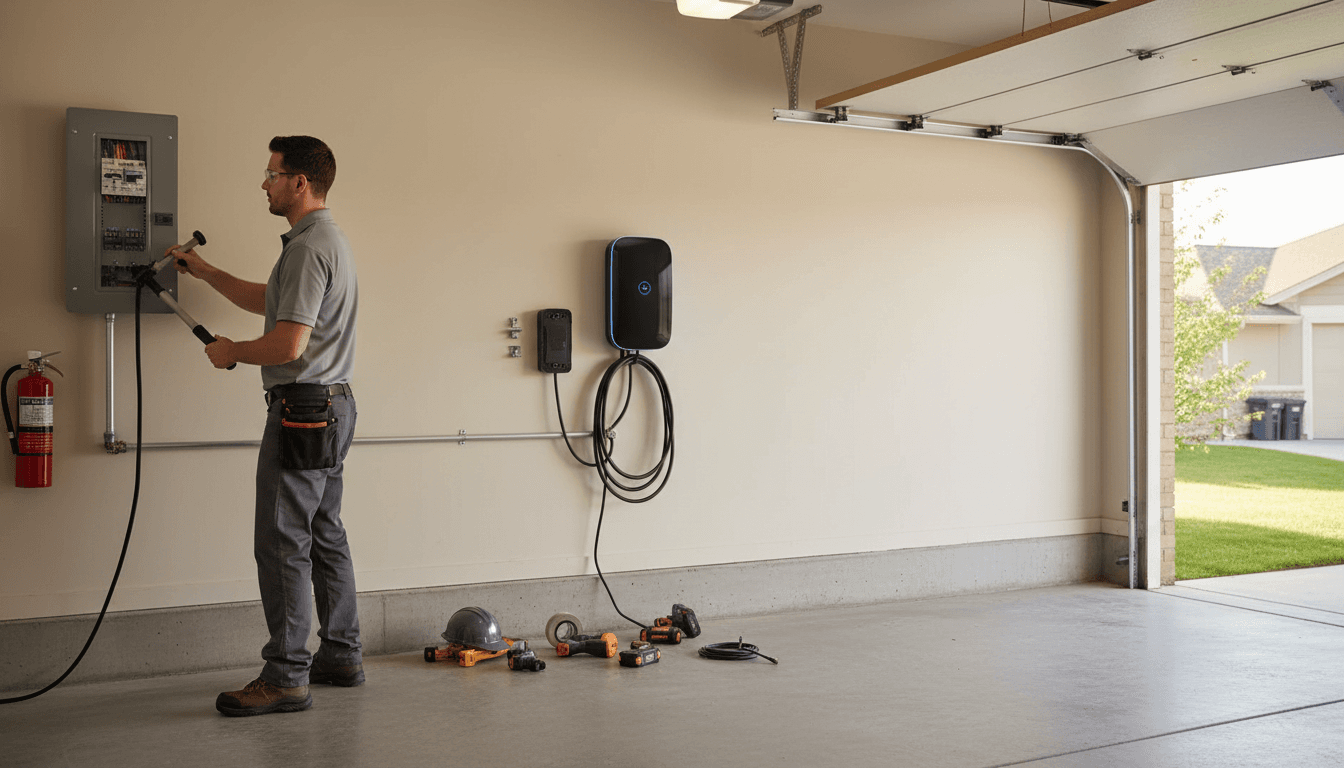
The hardware unit itself typically accounts for $700 to $2,000 of the total bill. This price reflects the inclusion of smart features such as RFID access for shared carports or dynamic load balancing for homes with high power demands. The professional labor, ranging from $500 to $1,500, covers the installation of a new dedicated circuit, the mounting of the unit, and the required Victorian Certificate of Electrical Safety (CES). These costs ensure the installation is not just functional, but compliant with insurance and safety regulations.
Factors That Drive the Total Bill: Beyond the Charger
The final EV charger installation cost Australia 2026 often hinges on the unique physical layout of your property. It is common for two neighbors to purchase the same hardware yet receive different quotes because of site-specific complexities. The primary variable is the distance between your main switchboard and the desired charging point. High-capacity cabling is copper-intensive and requires specialized protection; each additional meter typically adds $30 to $50 to the project total. For a carport located right behind the switchboard, this cost is negligible. However, for a detached garage at the rear of a deep block, the cabling alone can become a major line item.
Melbourne’s diverse architectural landscape plays a significant role in labor complexity. Installing a Melbourne EV charger installation in a modern build with accessible wall cavities is relatively straightforward. In contrast, older Victorian terraces often necessitate external conduit or routing through difficult sub-floor spaces to preserve the building’s heritage aesthetics. If the cable must cross a driveway or landscaped garden, trenching requirements will further influence the final bill.
Beyond the physical wiring, the specific smart capabilities you choose will dictate the investment level. Buddy Charge specializes in single-phase smart chargers that offer Wi-Fi or Bluetooth connectivity for app-based scheduling and solar EV charging integration. If you are installing a unit in a shared driveway, an apartment complex, or a holiday rental, hardware with RFID access control ensures only authorized users can activate the station. While these features enhance security and property value, they require more sophisticated hardware and precise configuration during the commissioning phase to ensure seamless connectivity with your local network.
The Melbourne Switchboard Situation: Is an Upgrade Necessary?
One of the most common questions regarding the total EV charger installation cost Australia 2026 is whether the existing electrical switchboard can handle the new load. In Melbourne, where housing ranges from century old cottages in Fitzroy to mid century homes in Glen Waverley, roughly 30% to 45% of properties require some level of electrical infrastructure improvement. Older boards often lack the physical space for new breakers or do not meet current safety standards for high draw appliances like EV chargers.
The financial impact varies significantly based on the board's condition. For a modern switchboard with available capacity, installing a dedicated circuit and safety switches typically costs between $600 and $1,200. However, if your property still uses ceramic fuses or a board containing asbestos, a full replacement is usually mandatory for compliance. A comprehensive board upgrade in Victoria generally ranges from $2,000 to $3,800, particularly when hazardous material removal and updated grounding are required.
Buddy Charge addresses these infrastructure challenges through technical innovation rather than just hardware replacement. By using dynamic load balancing with our single-phase smart chargers, we can often bypass the need for a full, multi-thousand-dollar switchboard overhaul. This technology monitors your home’s real time power consumption; if you turn on an oven or air conditioner, the charger automatically throttles its output to prevent an overload. This intelligent management allows for a safe Melbourne EV charger installation even on limited electrical feeds, protecting your home’s circuits while maximizing the utility of your existing switchboard.
Single Phase vs. Three Phase: Which One Should You Buy?
Selecting between a single phase and three phase connection is a pivotal decision that impacts the total EV charger installation cost Australia 2026. Most residential properties in Melbourne operate on a single phase supply, supporting a 7kW charging rate. This configuration adds approximately 40 to 45km of range for every hour the vehicle is plugged in. Given that the average Victorian daily commute is roughly 36km, a standard overnight session on a 7kW Melbourne EV charger installation provides more than enough energy to replenish a full week of driving within just a few nights.
Three phase systems offer a significant jump to 22kW, yet the financial leap is equally steep. If your home is not already equipped with three phase power, the utility upgrade alone typically ranges from $2,000 to $5,000 before hardware is even purchased. While this is often marketed as a way to future proof a property, the practical benefits for a single vehicle household are frequently outweighed by the cost.
Feature | Single-Phase (7kW) | Three-Phase (22kW) |
|---|---|---|
Range Added per Hour | 40 to 45 km | 100 to 130 km |
Typical Upgrade Cost | $0 (Standard in most homes) | $2,000 to $5,000 |
Ideal User | Daily commuters | High-mileage or multi-EV homes |
Buddy Charge generally recommends single-phase smart chargers for most residential clients. Unless you manage a fleet of vehicles or have an exceptionally long daily commute that requires rapid turnaround times, the 7kW standard remains the most cost-effective and efficient choice for Victorian homes.
Maximizing ROI with Solar Smart Charging and Dynamic Load Balancing
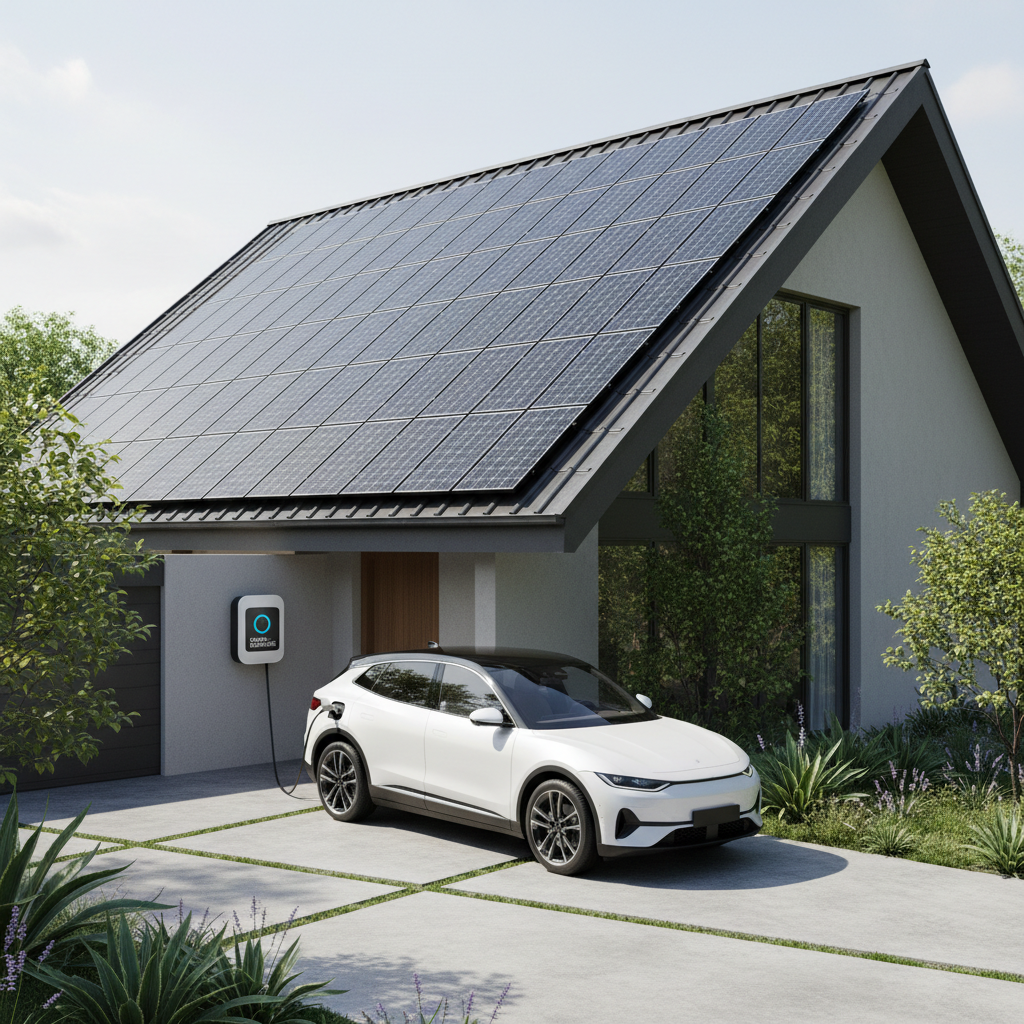
Investing in a high quality system shifts the focus from the initial EV charger installation cost Australia 2026 to the long term total cost of ownership (TCO). For Melbourne residents with rooftop solar, the path to a $0 fuel bill is through solar EV charging. Buddy Charge systems detect when your solar array is producing surplus energy that would otherwise be exported to the grid for a minimal feed-in tariff. By diverting this power into your vehicle, you effectively fuel your car for free, accelerating the payback period of your hardware investment.
Even for households without solar, smart app controls provide a distinct financial advantage. Victorian energy providers frequently offer significantly lower rates during off-peak windows, typically late at night or during the midday solar soak period. Using our single-phase smart chargers, you can automate your charging sessions to trigger only when electricity is at its cheapest, ensuring you never pay peak residential rates for transport.
Long-term ROI is also tied to hardware longevity. Melbourne's climate is famous for experiencing four seasons in one day, which is why our chargers feature IP65 weather protection. This industrial-grade sealing protects internal electronics from heavy rain and dust, preventing the premature failure common in cheaper, lower-rated units. Furthermore, the technical implementation of dynamic load balancing acts as a financial safeguard. By managing power flow to prevent circuit overloads, this technology often avoids the need for a multi-thousand dollar network upgrade, allowing a sophisticated Melbourne EV charger installation to operate safely within the limits of your existing electrical service.
Why Professional Installation Outperforms DIY or Portable Options
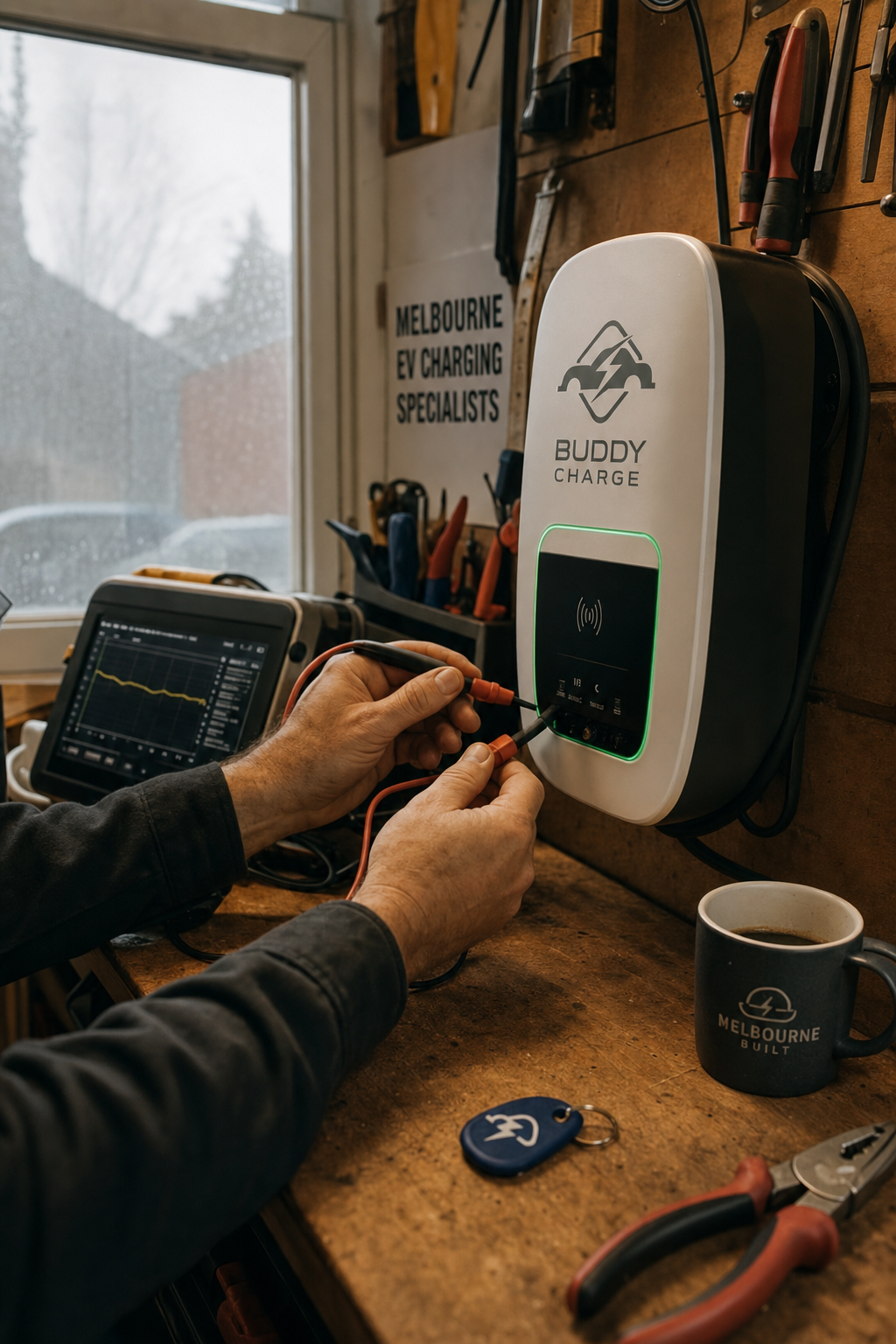
Relying on portable 'granny chargers' or basic plug-in units introduces significant risks to a home's electrical infrastructure. These devices often draw maximum current from standard domestic sockets for ten hours or more, creating heat stress that domestic outlets were never designed to endure. A professional Melbourne EV charger installation eliminates this risk by using a dedicated circuit and a hardwired Level 2 station.
Our single-phase smart chargers include advanced safety protocols, such as surge protection, over-temperature monitoring, and dedicated emergency stops. These features safeguard your property and vehicle in ways that generic portable units cannot.
In Victoria, compliance is a legal necessity. Any fixed installation requires a licensed electrician to provide a Certificate of Electrical Safety (CES). This certificate is the only way to ensure your solar EV charging system is legal and your home insurance remains valid. When calculating the EV charger installation cost Australia 2026, the inclusion of professional certification and industrial grade safety components is what distinguishes a future proof asset from a potential liability.
Understanding the true cost of an EV charger installation in Melbourne helps you plan your home upgrade without any hidden surprises. While hardware and labor prices fluctuate, being prepared for the technical requirements of your property is the best way to ensure a smooth transition. If you would like expert assistance navigating these choices, we are happy to help you find the right fit. Choosing a reliable Single Phase Charger can simplify your daily routine; our team is always available to guide you through the setup process.