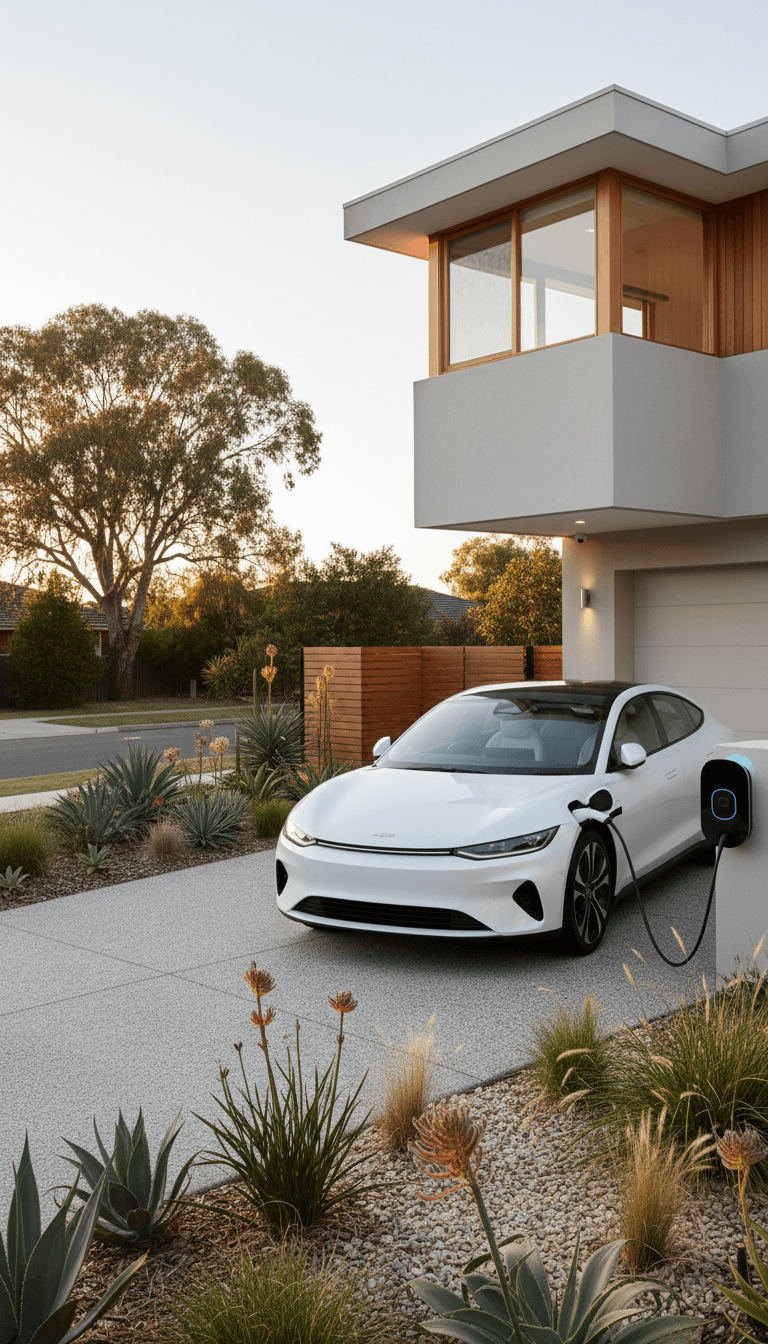
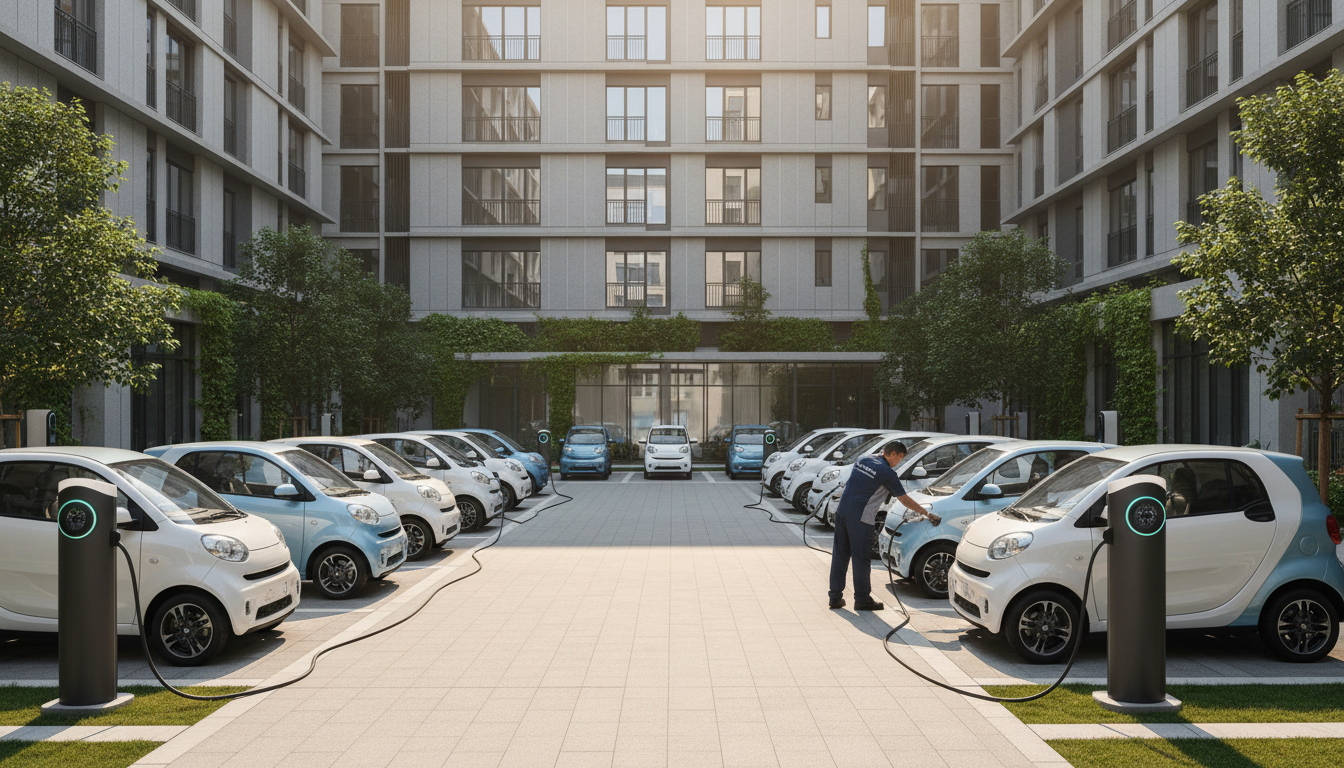
Small business fleet EV charging Australia requires integrating on-site depot hardware with specialized management software to optimize energy costs and vehicle uptime. Australian operators can maximize their return on investment by utilizing federal FBT exemptions and state rebates; these incentives often total over $21,000 per vehicle. Effective implementation starts with a thorough audit of daily mileage and electrical capacity to ensure the charging infrastructure supports the specific demands of trade and service fleets.
Managing a fleet of service vehicles is demanding enough without the added complexity of the shift to electric power. For many Australian small business owners, the transition to EVs feels like a technical distraction rather than a strategic move. However, as fuel prices fluctuate and new regulations loom on the 2026 horizon, the shift to electric is no longer just a choice; it is a financial necessity. Navigating three phase hardware, load balancing, and FBT exemptions requires a practical approach tailored to the unique conditions of Australian trades. This guide provides a clear roadmap for electrifying your fleet without disrupting your daily operations. You will learn how to balance charging between the depot and home, leverage your existing solar assets, and secure government incentives that protect your bottom line. We have simplified the logistics so you can focus on the work that matters.
Why 2026 is the Turning Point for Australian Business Fleets
The year 2026 represents a definitive shift in the Australian transport landscape. While early electrification efforts were dominated by large-scale corporations with significant capital, the current momentum is driven by small businesses, tradies, and local couriers. This transition marks the move from early adoption to an operational necessity. Volatile fuel costs have made internal combustion engines increasingly difficult to budget for; meanwhile, a maturing second-hand market for commercial electric vans has finally provided accessible entry points for smaller operators.
For a Melbourne-based plumbing business or a courier service, the decision to switch is no longer about environmental optics. It is about protecting the bottom line. The infrastructure supporting small business fleet EV charging Australia has matured alongside the vehicles themselves. Reliable, smart systems are now required to manage daily rotations and ensure vehicles are ready for the morning start.
As more businesses realize the significant reduction in per-kilometer running costs, the demand for expert Melbourne EV charger installation has surged. This pivot is supported by a growing network of workplace EV charging solutions that allow businesses to treat their depots or home offices as private fuel stations. This shift effectively insulates them from future energy price spikes and positions them to capitalize on the financial advantages of a modern fleet.
Understanding Small Business Fleet EV Charging Costs and ROI
Determining the financial viability of a transition requires a granular look at initial capital expenditure versus long-term operational savings. Installation costs for workplace EV charging solutions vary depending on existing switchboard capacity and the distance to the parking area; however, for a typical small business, the investment covers both the intelligent hardware and the specialized electrical labor required for compliance.
The return on investment (ROI) extends far beyond the immediate reduction in diesel or petrol expenses. Electric drivetrains possess significantly fewer moving parts than internal combustion engines, which translates to a drastic reduction in scheduled maintenance and downtime. There are no oil changes, spark plugs, or timing belts to replace; meanwhile, regenerative braking preserves brake pads for much longer durations. Furthermore, operating a clean, quiet fleet enhances brand reputation, signaling to clients that the business is forward-thinking and committed to local sustainability.
While industry benchmarks often suggest a break-even timeline of three to five years, strategic implementation of small business fleet EV charging Australia can shorten this window considerably. The key lies in smart software that automates charging to coincide with off-peak electricity tariffs. By scheduling charging for the early hours of the morning or integrating existing solar arrays to soak up excess generation during the day, businesses can lower their cost per kilometer to a fraction of traditional fuels. This intelligent energy management, combined with federal tax incentives, ensures that the hardware pays for itself while simultaneously future-proofing the company's energy independence.
Choosing the Right Hardware: Single Phase versus Three Phase Chargers

Selecting the physical infrastructure for small business fleet EV charging Australia requires a strategic balance between charging speed and the existing electrical capacity of your site. For a fleet of one to five vehicles, a uniform approach is rarely the most efficient. Instead, a mix of single-phase and three-phase units often provides the best utility for a service-based business.
Single-phase chargers, typically delivering 7.4kW, are the standard for vehicles that remain stationary for eight hours or more. These are ideal for overnight charging at a driver’s residence or for staff who remain in the office all day. However, for vehicles with high daily mileage or those that return to a base between jobs, the Buddy Charge 3-phase 22kW charger is a critical asset. These units provide the quick turnaround necessary for a midday top-up, ensuring a van is ready for an afternoon run without hours of downtime.
Feature | Single-Phase Charger (7.4kW) | Three-Phase Charger (22kW) |
|---|---|---|
Approx. Range Added | 35–45 km per hour | 100–120 km per hour |
Electrical Requirement | 230V / 32A | 400V / 32A |
Primary Application | Overnight / Home charging | Rapid depot turnarounds |
Installation Complexity | Standard | Requires three-phase power |
Durability is equally important for Australian tradies who may need to install hardware in outdoor yards or exposed carports. All workplace EV charging solutions provided by Buddy Charge feature IP65 weather protection, ensuring the internal electronics remain sealed against Melbourne’s heavy rain and dust. When planning your expert Melbourne EV charger installation, we assess the site’s current power supply to determine if your switchboard can support multiple 22kW units or if a managed combination of hardware is more appropriate to keep the fleet moving.
The Hybrid Charging Model: Managing Fleet EVs at Home and the Depot

Managing a mobile workforce requires a charging strategy that extends beyond the warehouse walls. For many service businesses, vehicles are kept at home by staff to facilitate early starts and direct travel to job sites. This decentralized approach is often the most efficient operational model; however, it presents a challenge for traditional expense management. Without accurate data, reimbursing employees for home electricity or managing Fringe Benefits Tax (FBT) obligations becomes a manual and error prone task.
Buddy Charge addresses this through integrated RFID access and cloud management software. By providing drivers with individual RFID cards, every charging session is logged against a specific vehicle and user, regardless of where the charger is located. This digital trail provides the precise kilowatt-hour (kWh) data needed to automate reimbursements. When a technician charges their van at home, the business receives a report detailing the exact energy consumed, allowing for transparent and tax-compliant settlements.
This hybrid model effectively turns every employee's driveway into a managed extension of your depot. When combined with workplace EV charging solutions for midday top-ups, it ensures maximum vehicle uptime. Utilizing smart small business fleet EV charging Australia platforms also simplifies FBT reporting; businesses can clearly differentiate between private and business energy use, ensuring that the fleet remains a cost-effective asset rather than an administrative burden.
Dynamic Load Balancing: Protecting Your Business Infrastructure from Overload
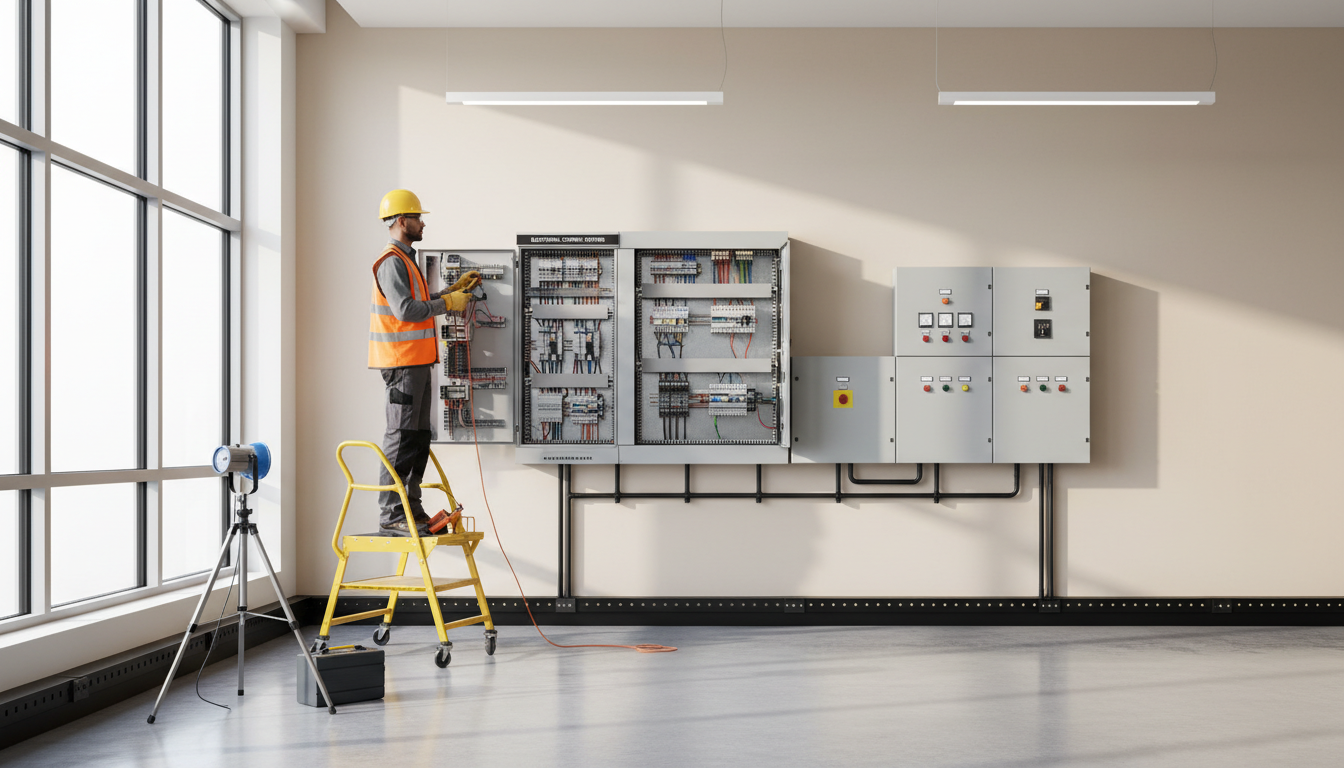
Operational anxiety often centers on the physical limits of a building’s electrical supply. In many Melbourne warehouses or commercial offices, the existing switchboard was never designed to support several high-draw appliances simultaneously. Plugging in multiple fleet vehicles at the end of a shift creates a significant spike in demand that risks blowing the main fuse. Dynamic load balancing (DLB) acts as an automated traffic controller for your power supply.
Integrating workplace EV charging solutions does not have to mean commissioning an expensive switchboard upgrade. Buddy Charge systems utilize intelligent sensors to monitor the total real-time consumption of your premises. When the building’s base load increases, perhaps due to heavy machinery or HVAC systems, the smart controller automatically throttles the charging speed of the connected vehicles. As the building’s demand drops after hours, the system restores the chargers to their maximum capacity.
Feature | Static Charging | Buddy Charge Dynamic Load Balancing |
|---|---|---|
Power Allocation | Fixed at a set limit | Adjusted in real-time |
Overload Risk | High if limit is exceeded | Virtually eliminated |
Upgrade Requirement | Often requires new mains/switchboard | Maximizes existing infrastructure |
Fleet Scalability | Limited by fuse capacity | Highly scalable and flexible |
This intelligent management is essential when deploying a 3-phase 22kW charger. During an expert Melbourne EV charger installation, we calibrate these parameters to match your site’s specific fuse ratings. This protects your infrastructure while ensuring small business fleet EV charging Australia remains reliable, providing a full charge for every van before the next morning’s first call-out.
Maximizing Solar Energy for Fleet Vehicles in Melbourne
Melbourne businesses are uniquely positioned to leverage solar energy to offset the operational costs of their fleet. While Victorian weather is famously variable, the city still receives significant solar radiation that can be harvested to provide essentially free fuel. For small business fleet EV charging Australia, the primary objective is to shift charging sessions to coincide with peak solar production, typically between 10:00 AM and 3:00 PM. This strategy is particularly effective for service businesses where vans return to a warehouse for restocking or mid-shift rotations.
By selecting workplace EV charging solutions that offer dedicated solar integration, you can utilize "Green Charging" modes. These prioritize excess solar generation over grid power, ensuring vehicles are topped up using clean energy rather than drawing from the grid during high-tariff periods. For fleets that remain on the road during daylight hours, stationary battery storage allows businesses to capture that energy and discharge it into the vehicles overnight. During an expert Melbourne EV charger installation, we configure your system to communicate directly with your solar inverter, maximizing self-consumption and driving your per-kilometer cost toward zero.
Claiming Government Rebates and FBT Exemptions for Small Fleets
The transition to an electric fleet is currently heavily subsidized by the Australian government, providing a unique window where the total cost of ownership for an EV is significantly lower than a diesel equivalent. The primary driver of these savings is the Federal Fringe Benefits Tax (FBT) exemption for eligible plug-in electric vehicles. For a small business, this exemption can translate to a saving of $15,000 to $18,000 per vehicle over a typical three year term. By removing the 47 percent tax usually applied to the private use of company cars, the government has effectively lowered the operational cost for the employer.
When combined with state-specific incentives, the total benefit can exceed $21,000 per vehicle. While programs like the NSW EV Fleets Kick-start funding offer up to $5,000 per passenger vehicle and $3,000 per charging port, Victorian businesses benefit from registration discounts and targeted fleet transition grants available in FY26. These programs are often budget-capped; the NSW grant, for instance, has a strict deadline of November 30, 2026, or until the remaining $1.5 million pool is exhausted.
Incentive Type | Estimated Value | Eligibility Notes |
|---|---|---|
Federal FBT Exemption | $15,000 to $18,000 | BEVs under the LCT threshold |
Charging Port Grant | Up to $3,000 | Varies by state; often covers hardware |
Registration & Stamp Duty | $500 to $2,000 | State dependent; annual or upfront savings |
Securing these rebates requires precise documentation of your workplace EV charging solutions and vehicle specifications. Because these incentives often require applications prior to purchase, engaging with an expert Melbourne EV charger installation team early ensures your infrastructure, such as a 3-phase 22kW charger, meets the technical requirements for small business fleet EV charging Australia grants. Acting before the April 2027 FBT review is essential to lock in these significant financial advantages.
Next Steps for Electrifying Your Australian Service Fleet
Implementation for small business fleet EV charging Australia typically follows a structured 4 to 6 week timeline. Start by auditing daily mileage and vehicle dwell times to determine the necessary mix of workplace EV charging solutions. During week two, schedule a technical site assessment. An expert Melbourne EV charger installation specialist must evaluate your switchboard capacity and determine if dynamic load balancing can bypass a costly mains upgrade.
Week 1: Audit vehicle usage patterns and dwell times.
Week 2: Technical site inspection and electrical capacity check.
Week 3: Hardware selection, including the 3-phase 22kW charger, and cloud platform setup.
Week 4-6: Professional installation, compliance certification, and driver training.
Selecting a management platform is the next priority to ensure RFID access and energy reporting are active from day one. Professional installation by specialists ensures all hardware meets Australian Standards and IP65 weather ratings. This compliance is essential for long-term reliability in Melbourne's variable conditions; protecting your investment against dust and heavy rain while ensuring every vehicle is ready for the morning shift.
Moving your small business fleet to electric vehicles is a significant step toward lowering overheads and future proofing your operations. While the initial planning phases can feel complex, focusing on a scalable infrastructure strategy ensures your tradies stay on the road without downtime; if you would prefer some expert guidance to navigate the technical requirements, exploring our options for Workplace Charging is a great next step. We can help you build a system that grows alongside your fleet, ensuring a seamless transition for your service team.